
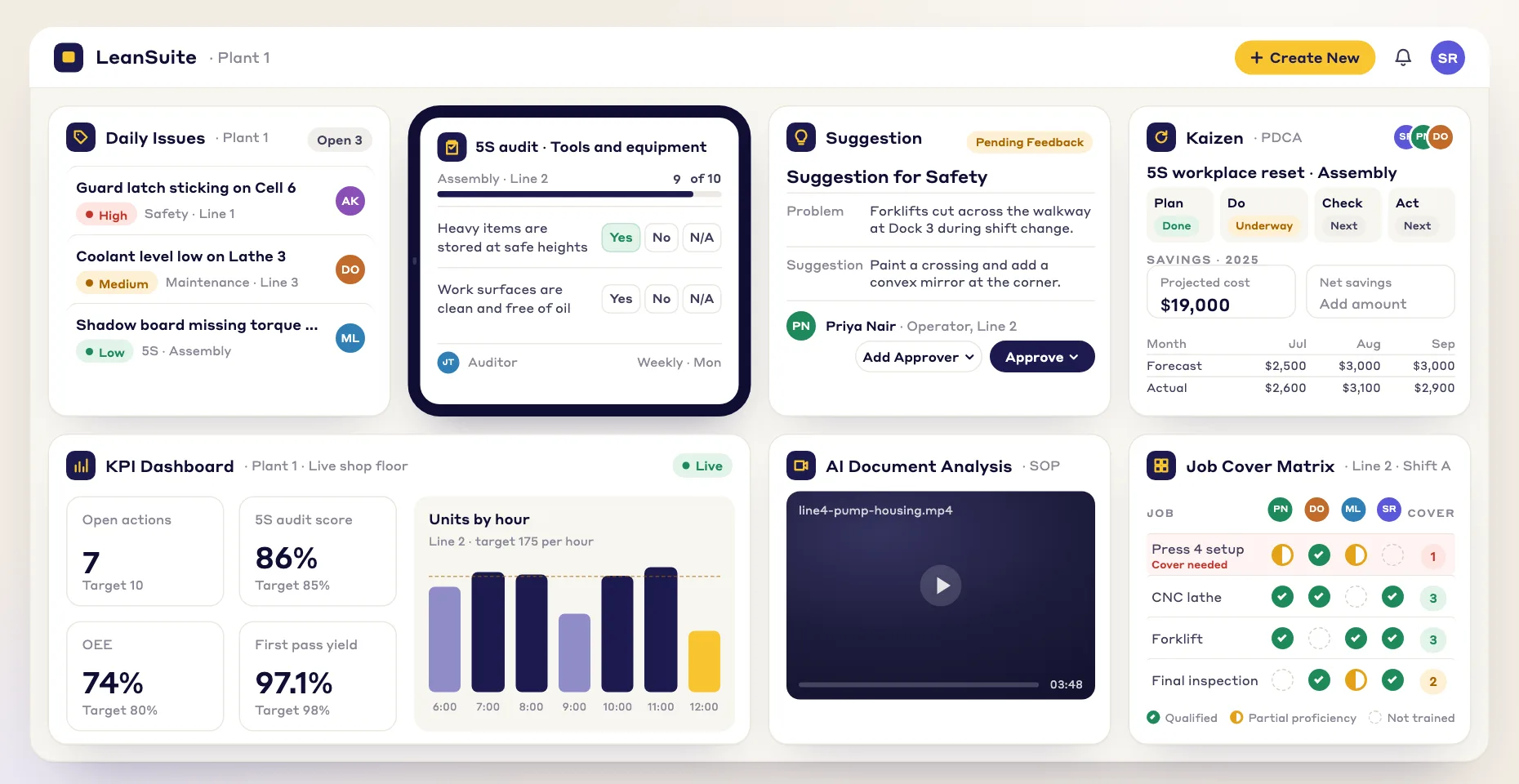


In today’s blog, we’ll be discussing what a connected worker platform is, and the benefits of a connected worker platform.
What is a connected worker platform?
Connected worker platforms are digital software tools that help industrial companies improve the way their employees work. It makes it easier to control manufacturing processes by creating new connections between machines, devices, and applications. In essence, these tools allow them to effectively plan, schedule, and monitor simple and complex manufacturing operational activities across multiple teams and locations. As a result, this helps improve communication and collaboration, and provides guidance and support within the workforce.
Connected worker platforms often operate on a cloud-based management system that operations managers or production supervisors use to create, assign, and manage any work being done. Frontline workers also use these platforms to perform the work assigned to them on any mobile device or relevant wearable technology.
Depending on a business’ goals and what they hope to implement, connected worker platforms can vary. But, in general, they help industrial companies:
- Get rid of paper-based work and transition to digital work instructions instead
- Schedule, assign, and manage work orders
- Implement effective training, and encourage collaboration and knowledge sharing
- Optimize complex manufacturing operational activities
- Gain actionable insight and improve the performance of their workforce
What are the benefits of a connected worker platform?

1. Improved employee morale
The first benefit of a connected worker platform is the improvement of employee morale. Frontline workers are one of a industrial company’s most valuable assets as they play a huge role in keeping their operations running. So, it’s important that they take care of their team. When a worker is connected, they have access to the data and resources they need to succeed. But, if they’re not connected, productivity and employee morale can quickly decline if they feel like they’re not being supported.
By using a software that is as easy to use as their favourite smartphone apps, frontline workers have all the information they need to solve problems, making their jobs easier and more satisfying. Additionally, when your team feels like they can live up to their potential and can successfully tackle problems independently, retention rates improve, which, in turn, increases employee engagement and productivity.
2. Improved worker safety
Industrial companies are responsible for the well-being of their workers on the shop floor. That’s why one of the more important benefits of a connected worker platform is the improvement of worker safety. Traditionally, when a new, non-connected worker struggles with a task, they would just try to do their best and risk dangerous mistakes to prevent a drop in productivity. However, a connected worker would be able to easily and quickly access digital work instructions, training materials, best practices shared across the organization, and much more. Connected worker platforms can also help ensure that companies remain compliant with local and industry rules and regulations. In addition, it can detect hazardous conditions before they can cause any workplace injuries.
3. Increased efficiency
One of the most attractive benefits of a connected worker platform is increased efficiency. Frontline employees know what to do and how to do it and therefore, time is not wasted. Essentially, they can get things done. What’s more, leaders and supervisors can automate schedules that fit the company’s bottom line and the workers. Tasks can also be allocated to streamline workflows, monitor employee performance, etc. In short, everyone can use the software to improve efficiency and productivity across all departments of the organization.
4. Improved communication
Connected worker platforms allow industrial companies to experience better communication. Workers can share problems, delays, and insights at the tap of a finger, allowing the entire plant to stay on the same page. Additionally, workers can come together to collaborate and solve problems without having to be in the same physical space. For instance, workers might use the platform to upload and share photos of safety problems on the shop floor, helping to identify problems and keep one another safe. They might also create specific chats dedicated to specific equipment so they can keep track of how each piece of equipment is performing for that day.
- Paper-based work and instructions
- A struggling new worker does their best and risks dangerous mistakes to keep up
- Problems and delays travel by word of mouth
- Morale and productivity drop when support is missing
- Digital work instructions, training and shared best practices on a mobile device
- Work orders scheduled, assigned and managed in one place
- Problems, delays and photos of hazards shared at a tap, across teams and locations
- Workers solve problems independently, which lifts retention and engagement
Frequently Asked Questions
What is a connected worker platform?
Digital software that helps industrial companies improve the way their employees work by linking machines, devices and applications. Operations managers and production supervisors use it, usually from the cloud, to create, assign and manage work, and frontline workers use it on a mobile device or wearable to carry that work out. It lets teams plan, schedule and monitor simple and complex operations across several teams and locations.
What does a connected worker platform do?
The details vary with a company's goals, but most platforms replace paper with digital work instructions, schedule and assign work orders and track them, deliver training and encourage collaboration and knowledge sharing, help run complex operational activities and give managers insight into how the workforce is performing. Workers get the information they need for a task where they stand instead of going to find it.
What are the benefits of a connected worker platform?
Four main ones. Better employee morale, because workers have the data and resources to solve problems themselves. Better safety, because a worker who is unsure of a task can pull up instructions and shared know-how instead of guessing. Higher efficiency, because people know what to do and how, and supervisors can schedule and allocate tasks. And better communication, with problems, delays and photos shared across the plant in seconds.
How does a connected worker platform improve safety?
A new or struggling worker without support will often push on and risk a dangerous mistake rather than slow production down. With a connected platform that worker can quickly open digital work instructions, training material and the methods other teams across the organization have shared. The platform also helps the company stay compliant with local and industry rules, and it can flag hazardous conditions before they cause an injury.
How does a connected worker platform improve morale?
Frontline workers keep operations running, and morale drops fast when they feel unsupported or cannot get the information they need. Software that is as easy to use as their favourite smartphone apps gives them what they need to solve problems, which makes the job easier and more satisfying. When people feel they can reach their potential and handle problems on their own, retention improves, and with it engagement and productivity.
Connect your workforce with LeanSuite
Your workforce deserves to be connected! If you’re looking to improve employee morale, efficiency and productivity, communication, and more, you’ll need the right connected worker platform.
At LeanSuite, we bring your people and processes together in ways that can help improve your overall operations and bottom line. This is possible because of our connected worker platform — it digitizes paper-based processes to empower workers and improve plant performance.
Want our lean manufacturing guides first in Google? Add us as a preferred source.
Add LeanSuite as a preferred source on Google (opens in a new tab)


