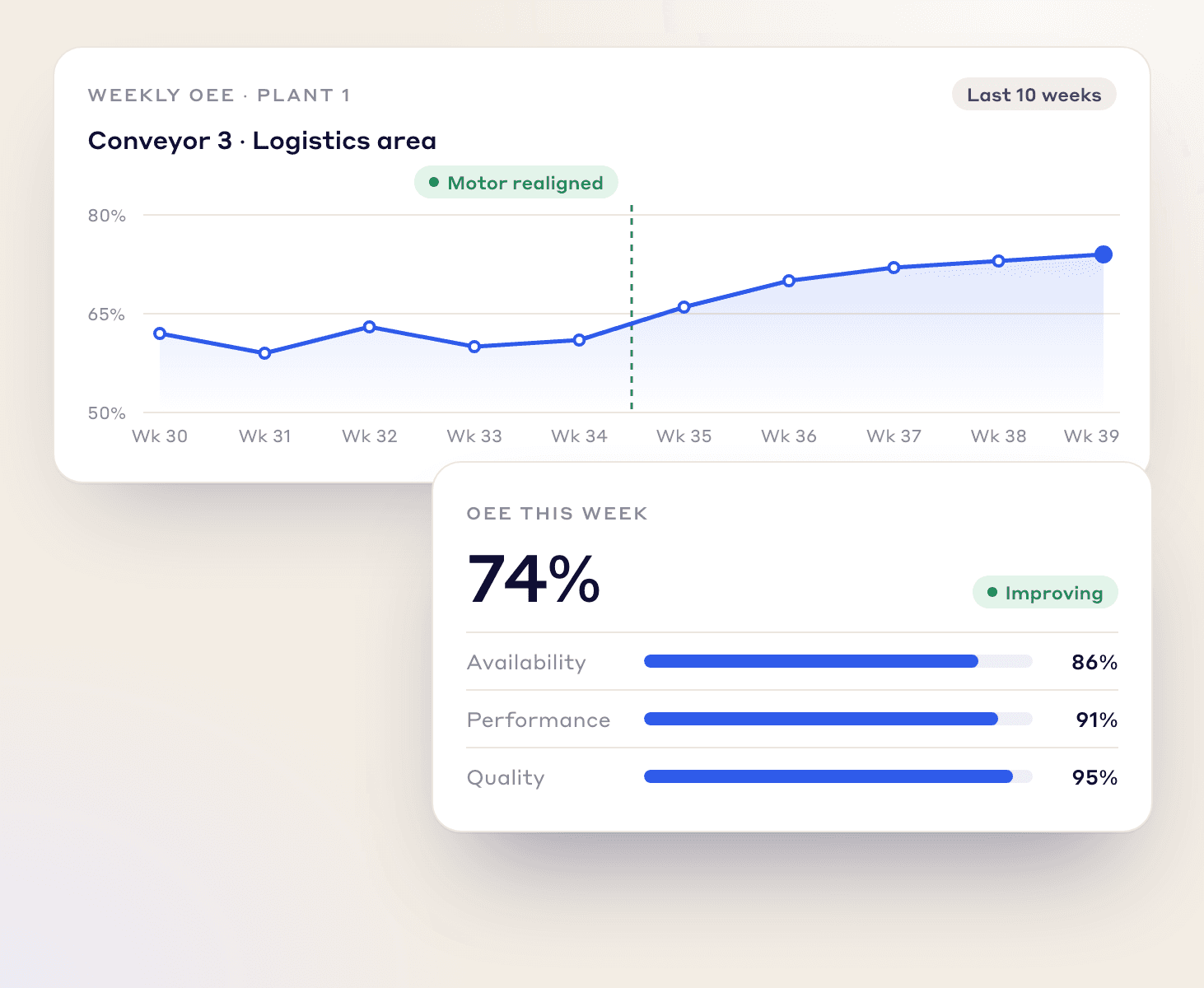
Overall Equipment Effectiveness (OEE)
Find and fix what keeps equipment down
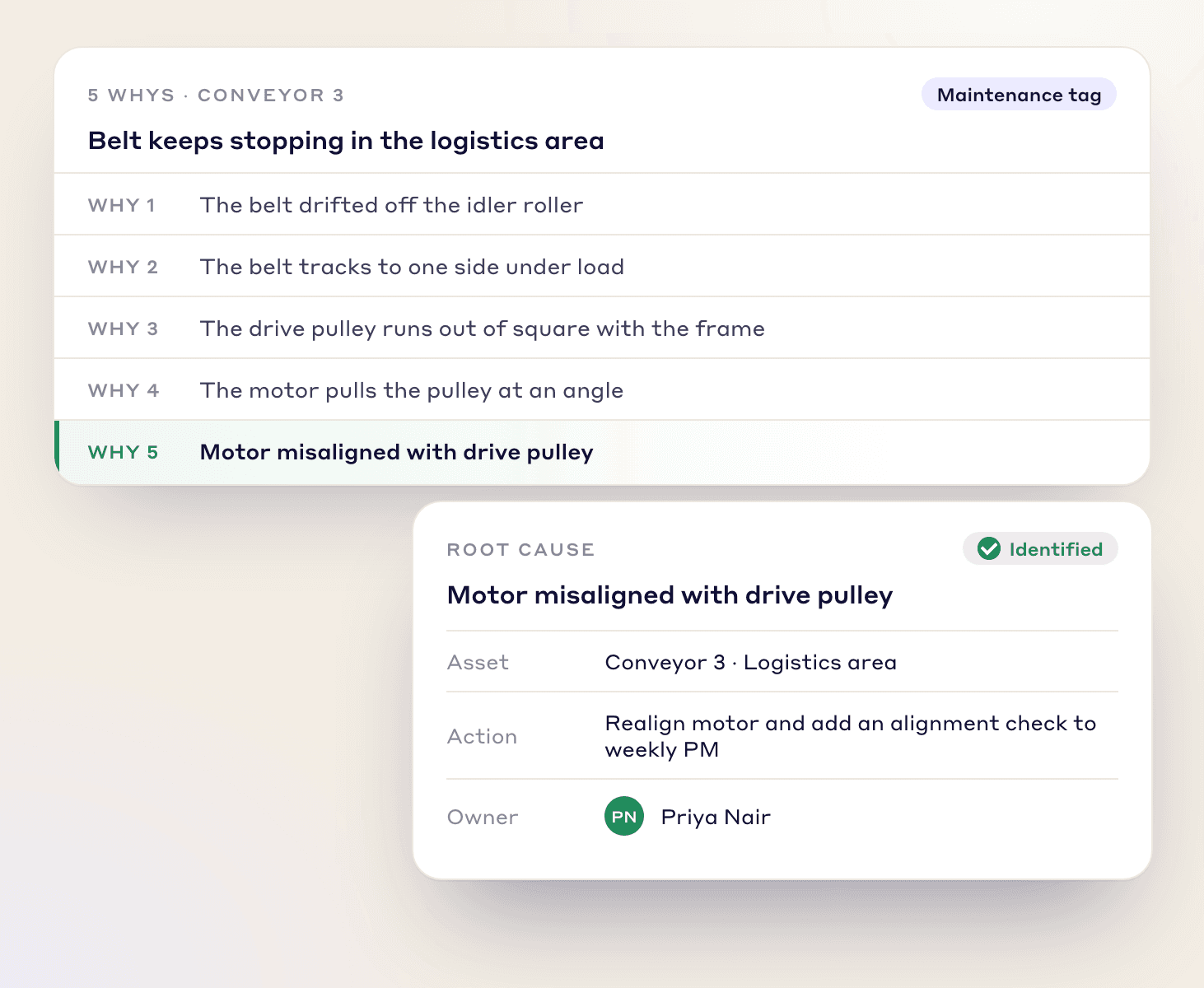
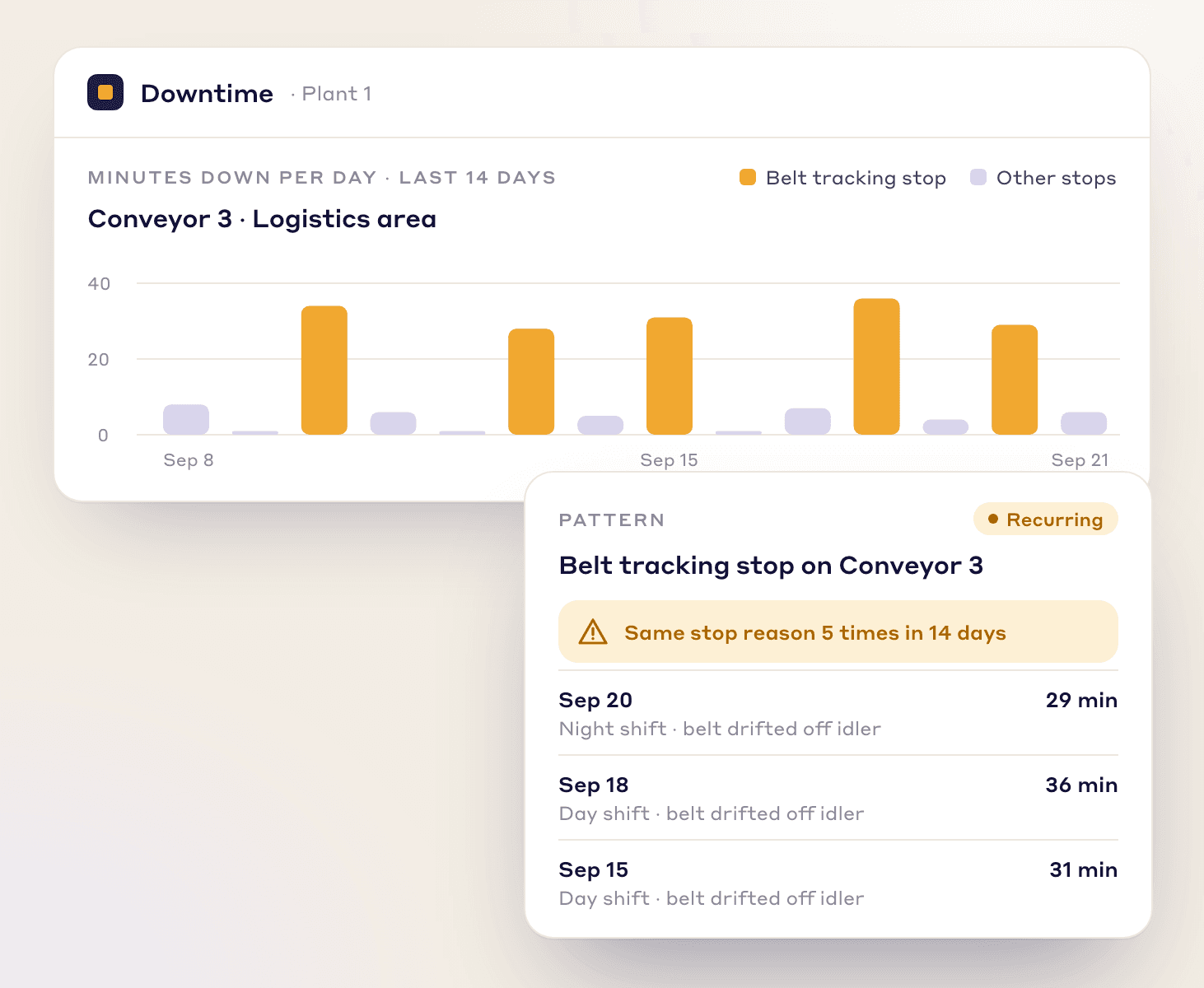
Spot recurring downtime, trace it to its root cause with lean tools, and keep maintenance on schedule to raise your OEE score.
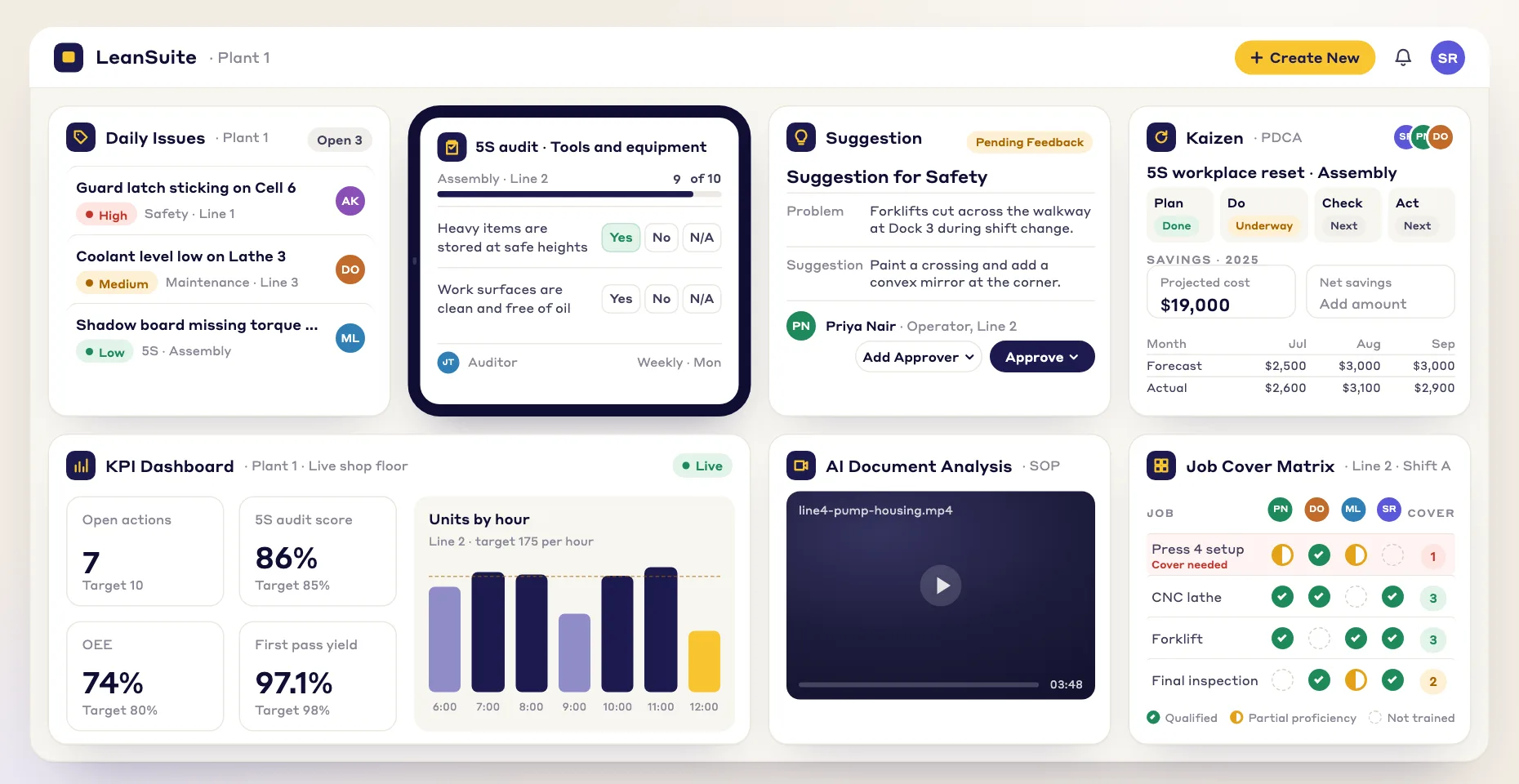
Operational excellence in manufacturing means repeatable processes, reliable equipment and problems fixed at the source. LeanSuite supports it with issue tags, Kaizen projects, standard work, KPI dashboards and suggestions.
By clicking "Schedule Demo," you agree to the use of your data in accordance with LeanSuite's Privacy Notice, including for marketing purposes.
WHY LEANSUITE
Overall Equipment Effectiveness (OEE)
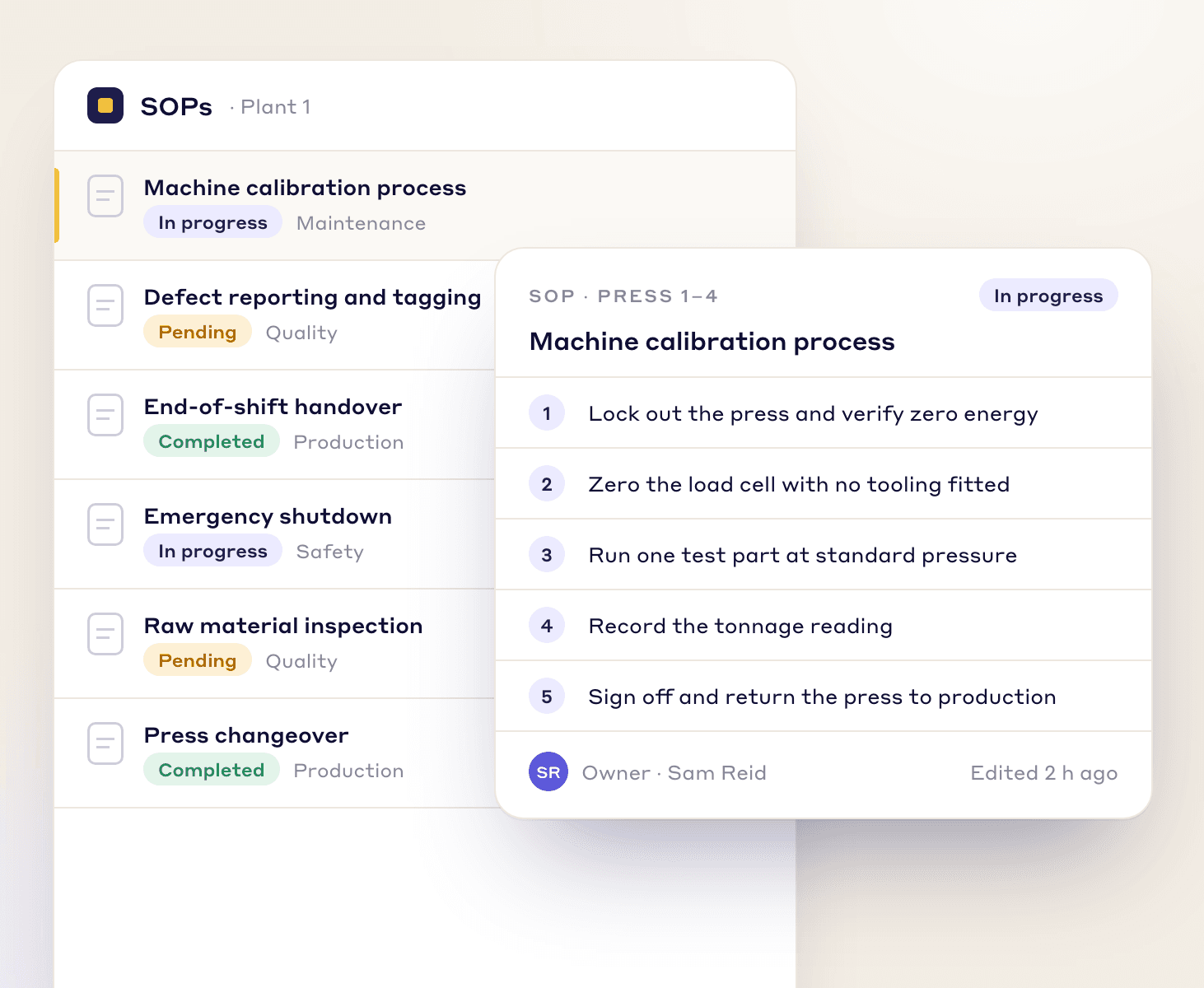
Process consistency
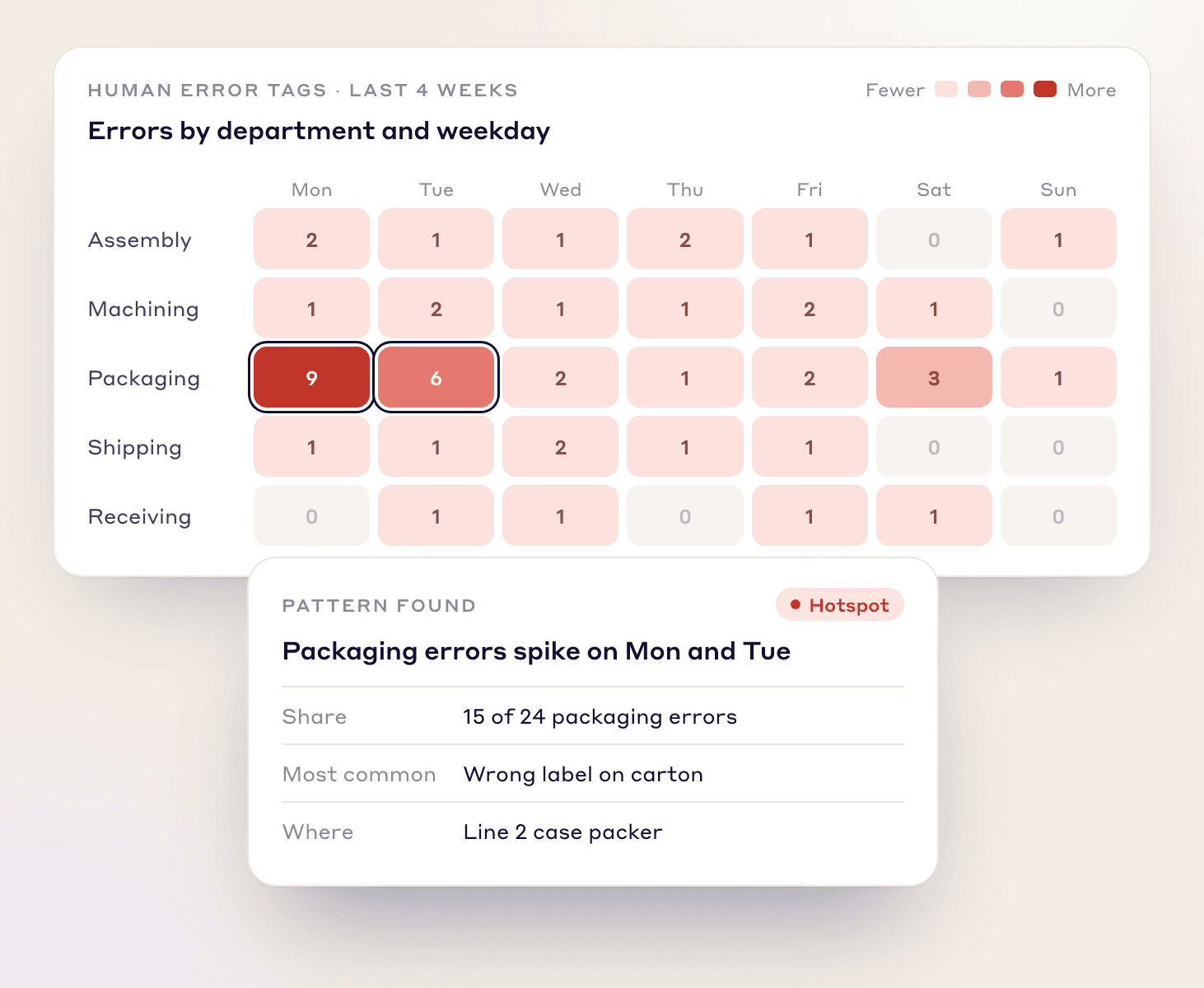
Human error
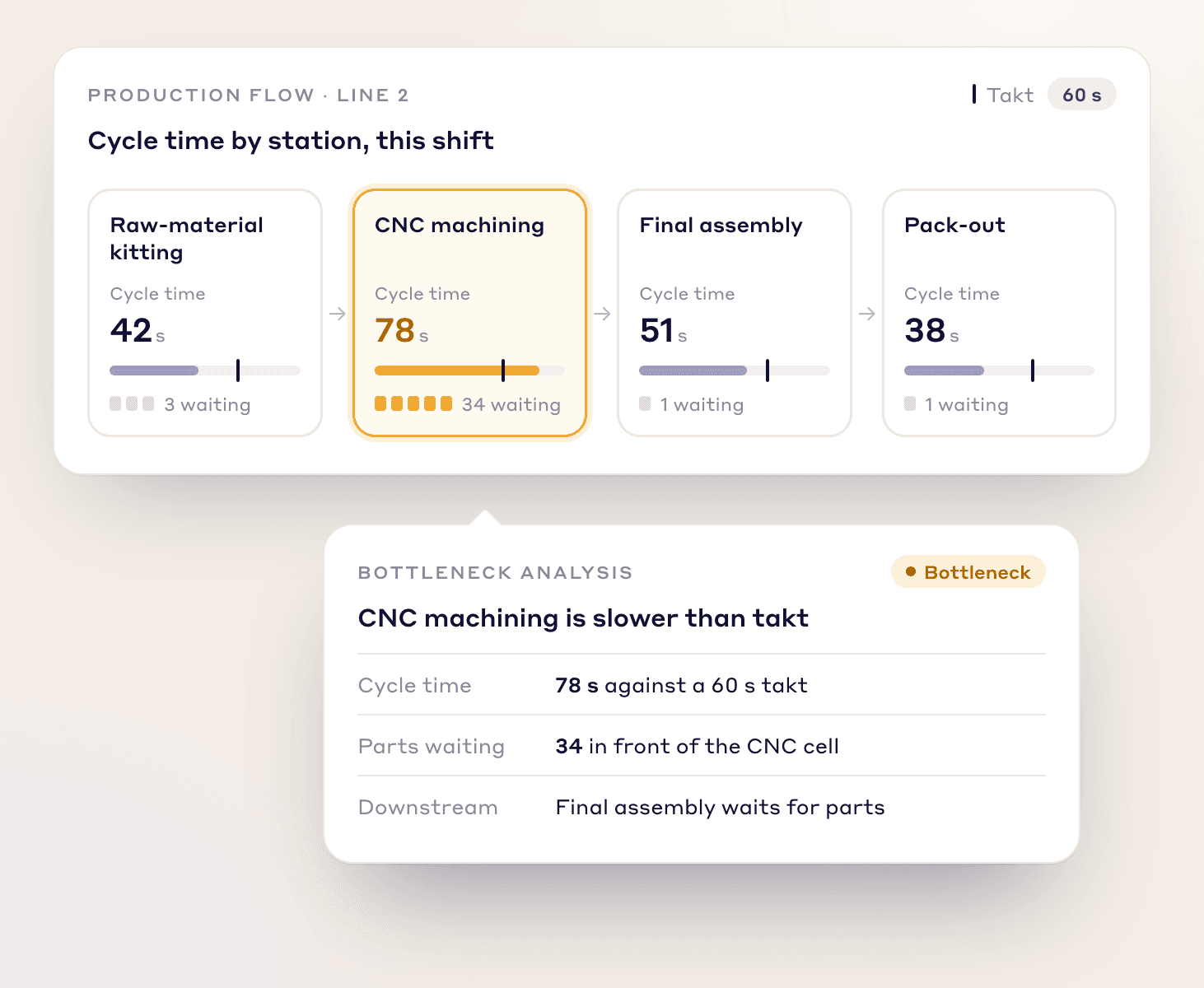
First Pass Yield (FPY)
Our solutions
Five LeanSuite tools to log issues, run improvement projects, document best practices, track KPIs and collect ideas.
Tag Management System
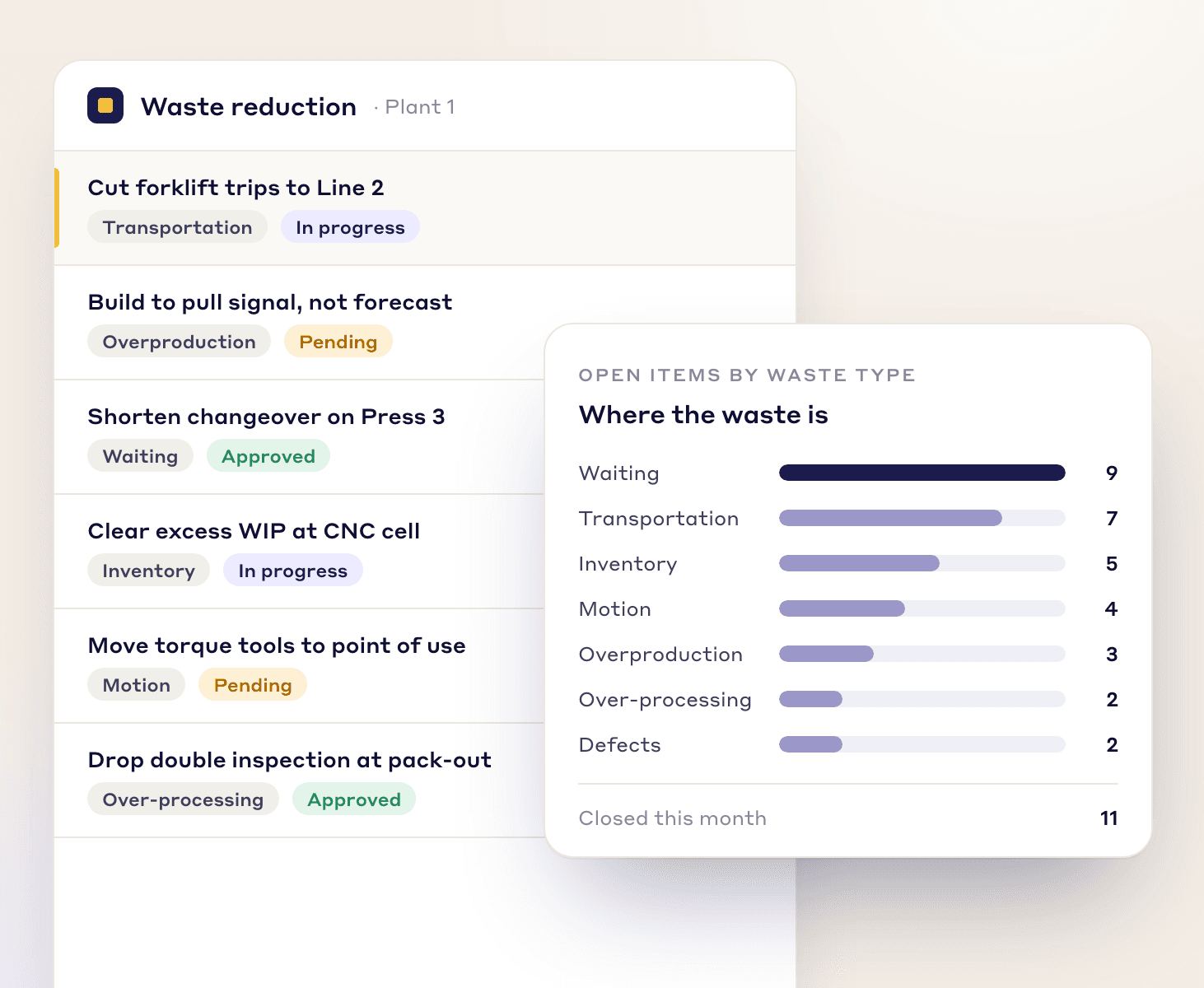
Log operational concerns and track each one to resolution in one place, so teams respond faster across the plant.
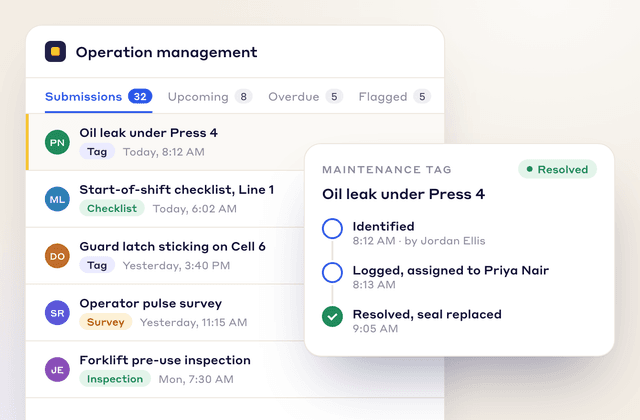
Continuous Improvement System
Launch targeted projects that remove inefficiencies, with your team driving the work day to day.
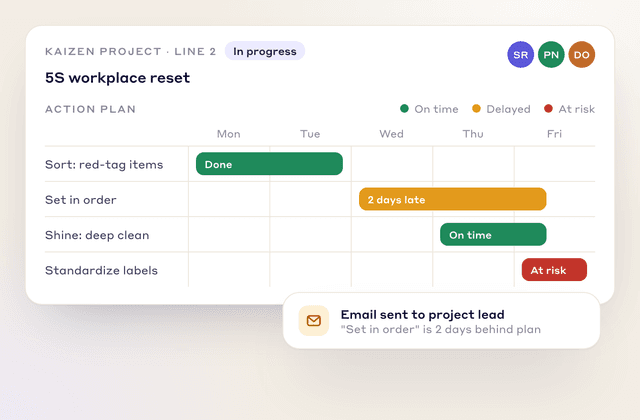
Manufacturing Document Builder
Capture your most efficient processes in easy-to-share documents, so a good idea doesn’t stay with the one team that found it.
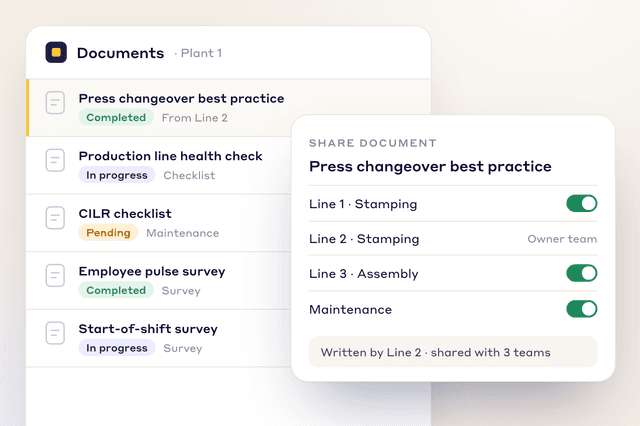
KPI Builder & Dashboards
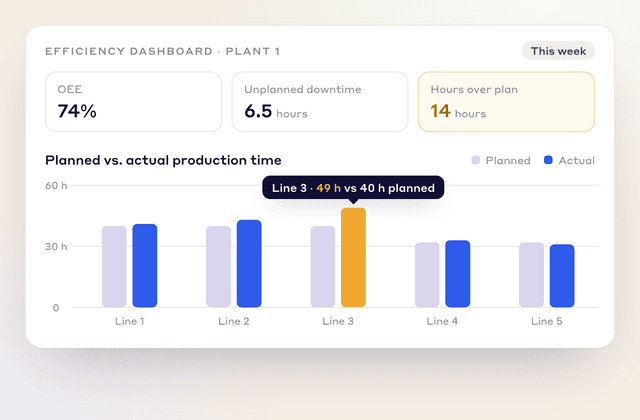
Track your custom efficiency metrics on one dashboard to see where slowdowns happen and where to streamline.
Suggestion Platform
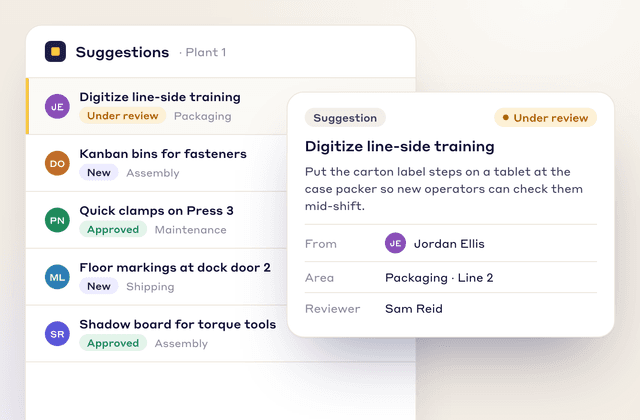
Collect and manage ideas from across your organization to surface bottlenecks and find better ways to work.
Tag Management System
Identify, log and resolve issues in one place
Log operational concerns and track each one to resolution in one place, so teams respond faster across the plant.
Schedule Demo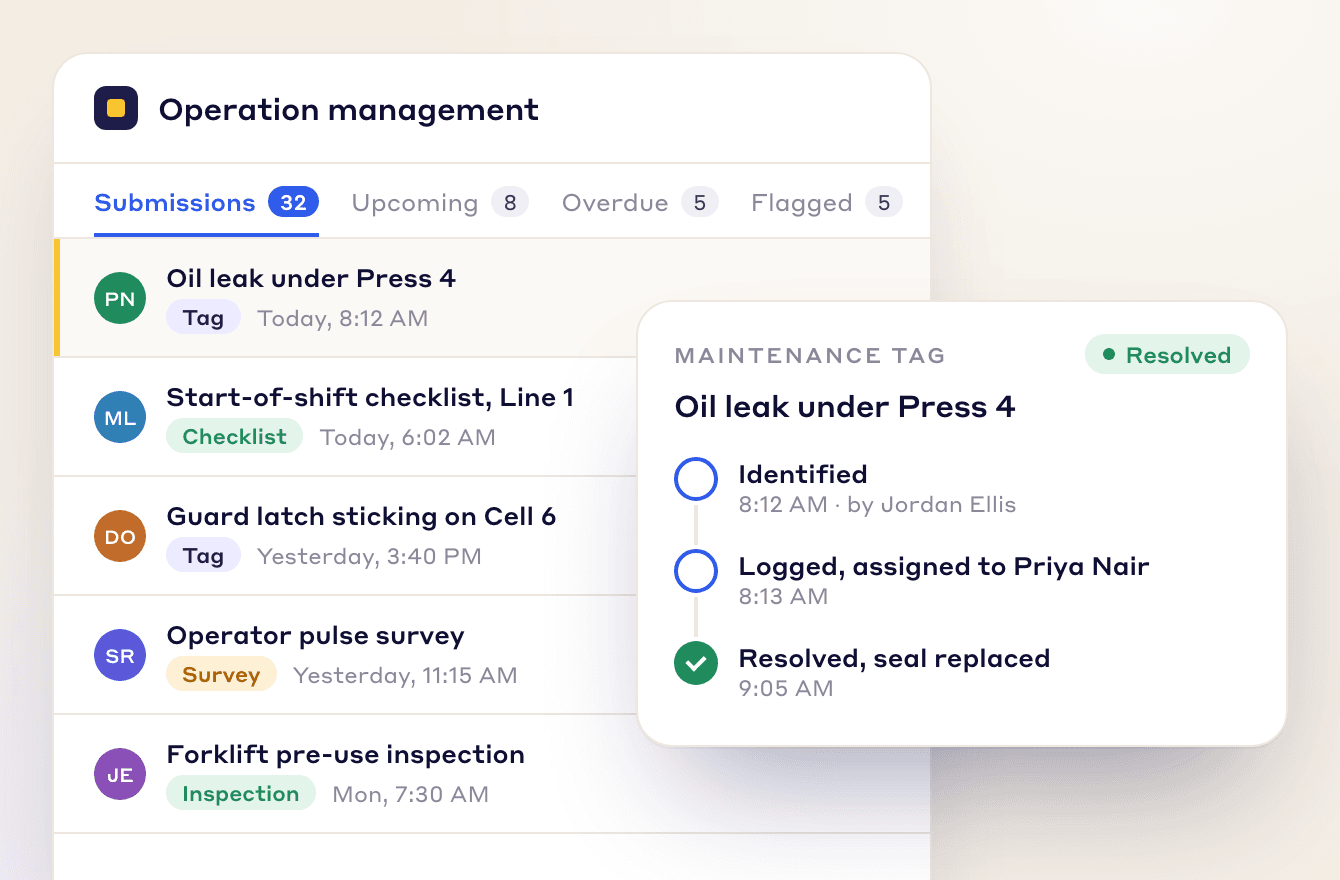
Use cases
FAQs
Operational excellence is a way of running a plant where processes are standard and repeatable, equipment stays running and teams keep finding and fixing problems. LeanSuite supports it with five tools: the Tag Management System, the Continuous Improvement System, the Manufacturing Document Builder, KPI Builder & Dashboards and the Suggestion Platform.
The most widely used set is the ten guiding principles of the Shingo Model: respect every individual, lead with humility, seek perfection, embrace scientific thinking, focus on process, assure quality at the source, improve flow and pull, think systemically, create constancy of purpose, and create value for the customer. In practice they come down to standard processes, problems fixed at the source, and people at every level improving the work.
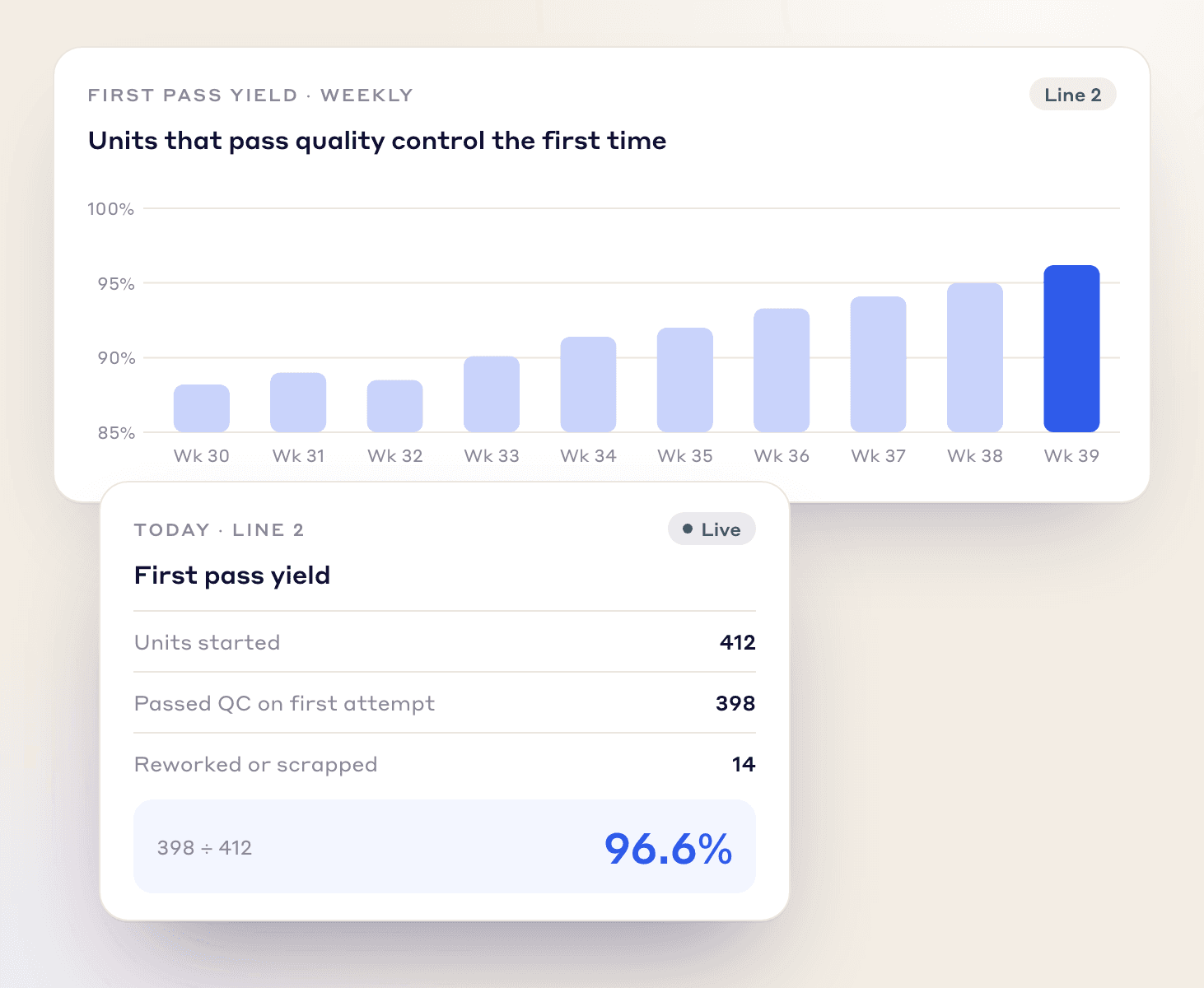
There is no single score, so plants track a few operating measures. Overall equipment effectiveness (OEE) shows how much planned production time is truly productive, and first pass yield (FPY) shows how many units pass quality control on the first attempt. LeanSuite's KPI Builder & Dashboards track these and your own efficiency metrics on one dashboard.
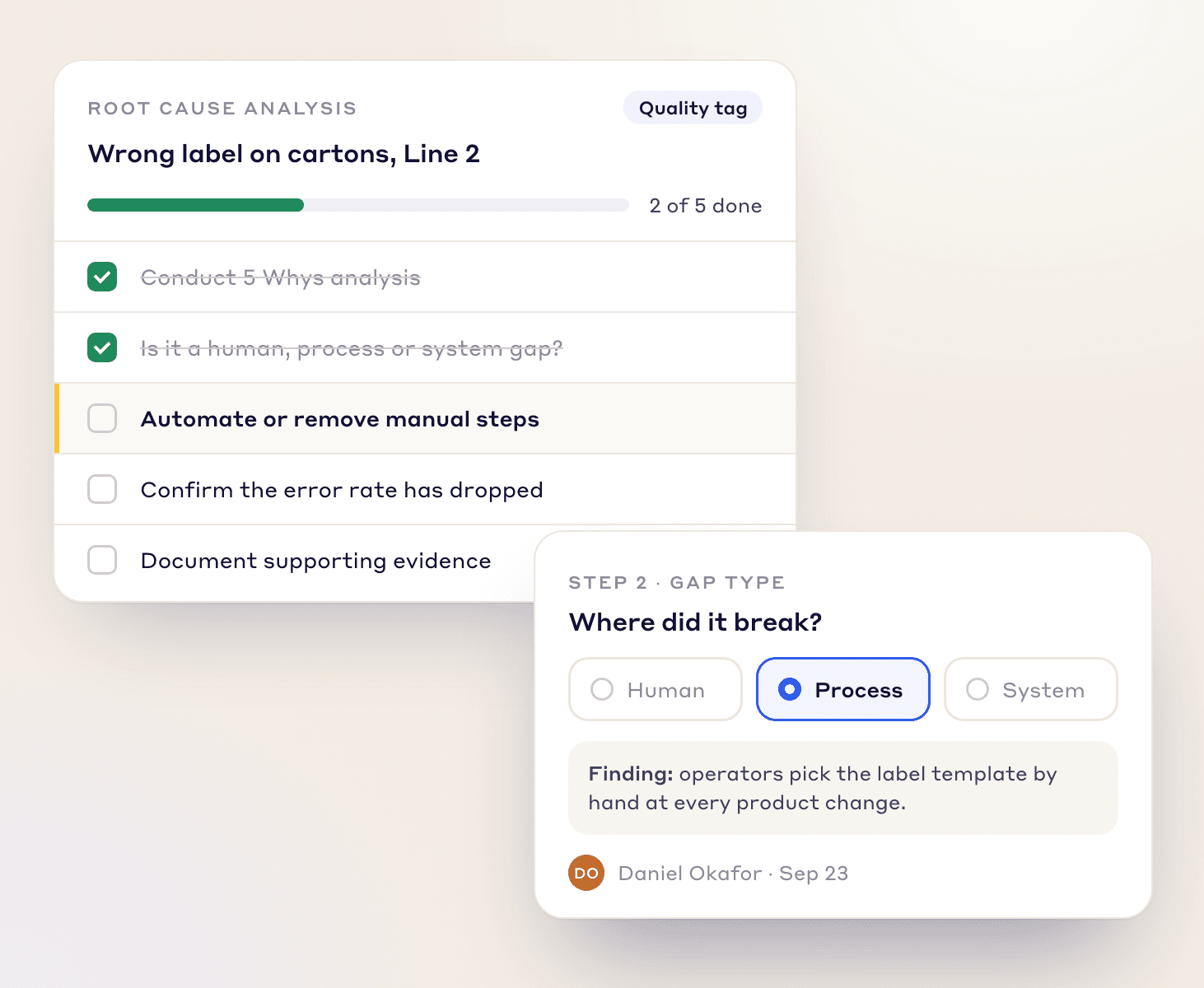
Tag each stop as it happens, log breakdowns as emergency work orders with downtime and MTTR, and turn recurring problems into Kaizen projects that fix the root cause.
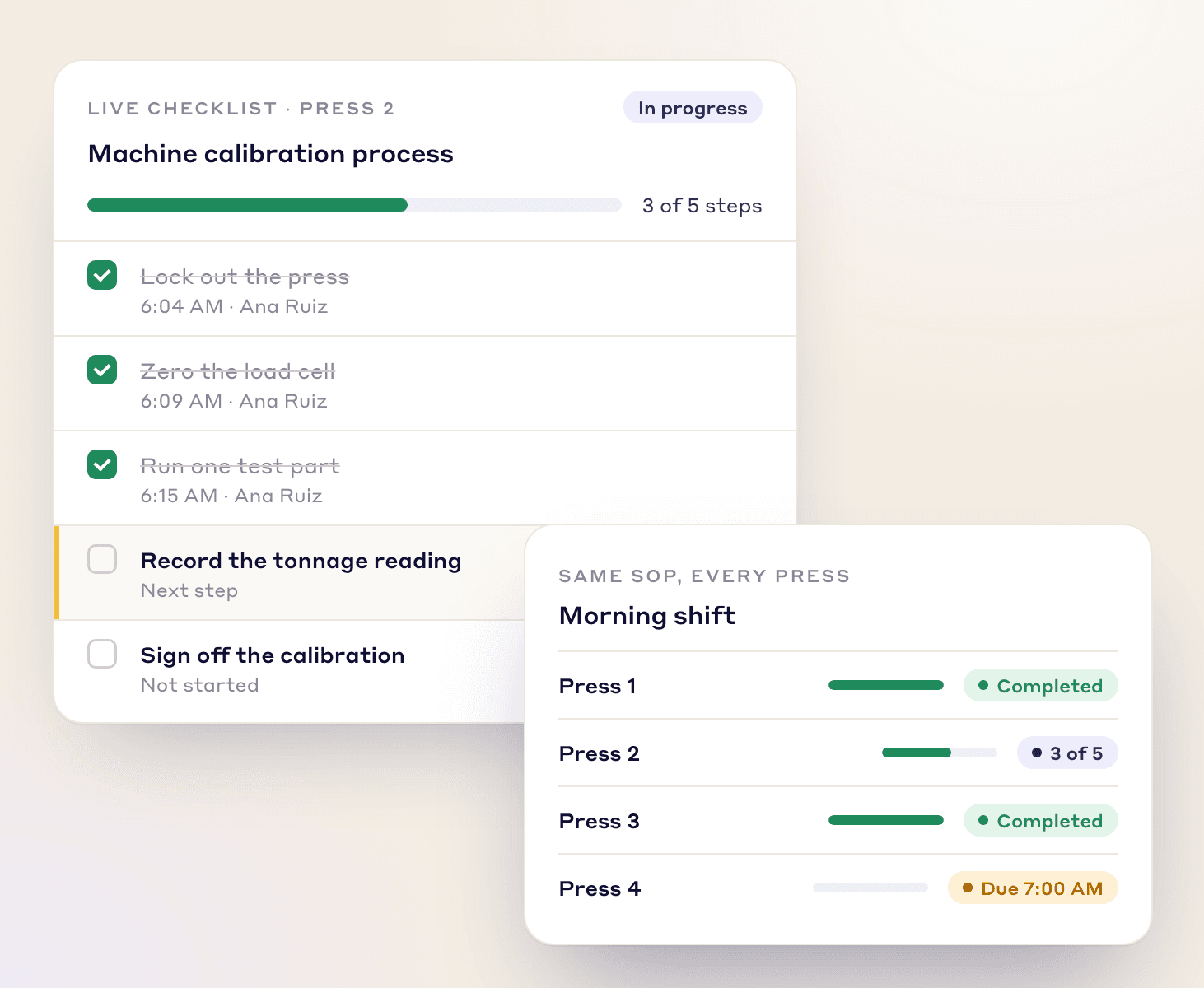
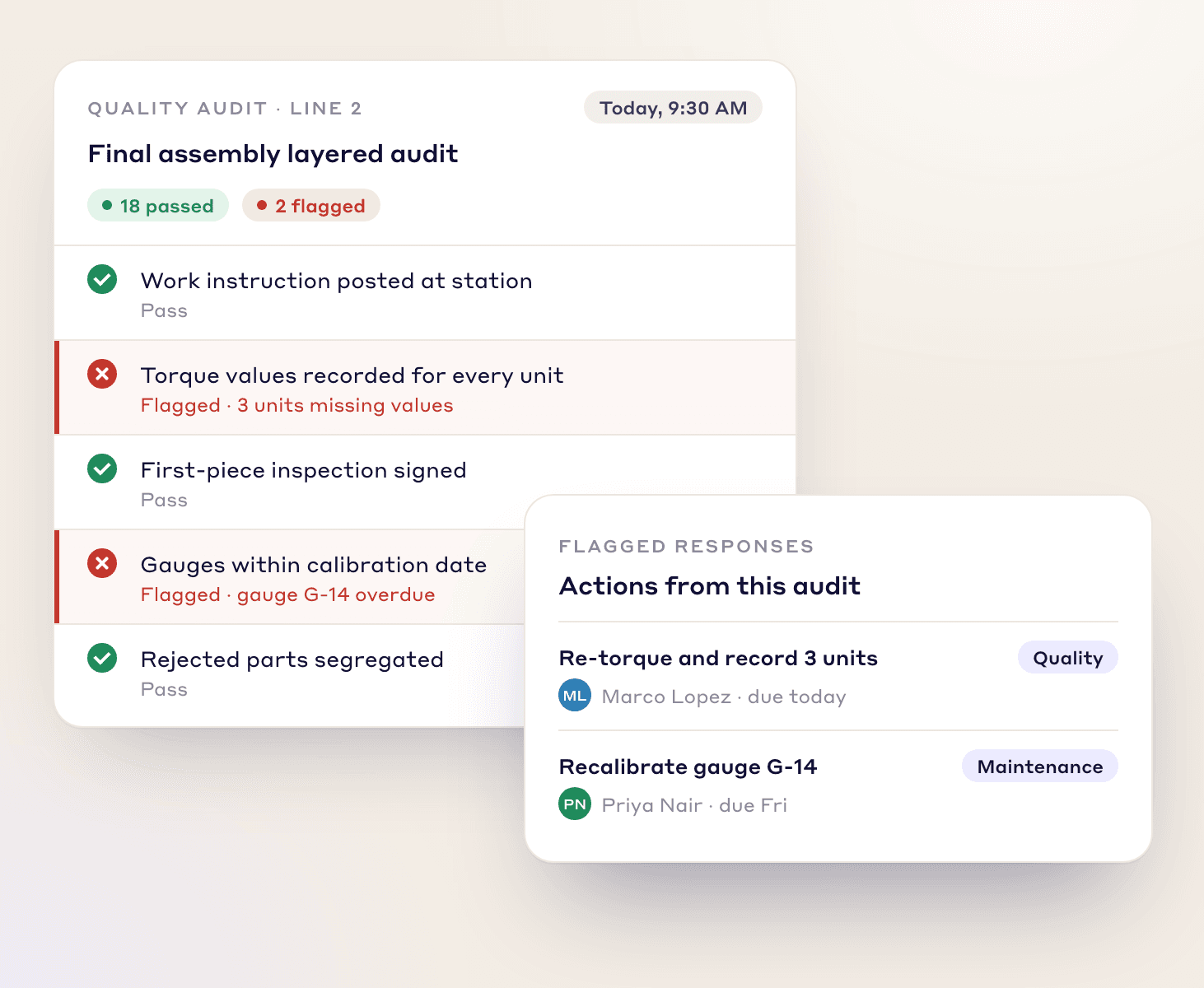
Write SOPs and schedule checks through Daily Standard Work, so each shift follows the same standard. The Manufacturing Document Builder shares your best processes across teams.
Lean daily management is the routine of reviewing performance every shift, raising problems where they happen and escalating what a team can't fix through tiered meetings. In LeanSuite, tags, Daily Standard Work and Lean Studio boards run that routine, and each problem keeps an owner and a due date until it is closed.
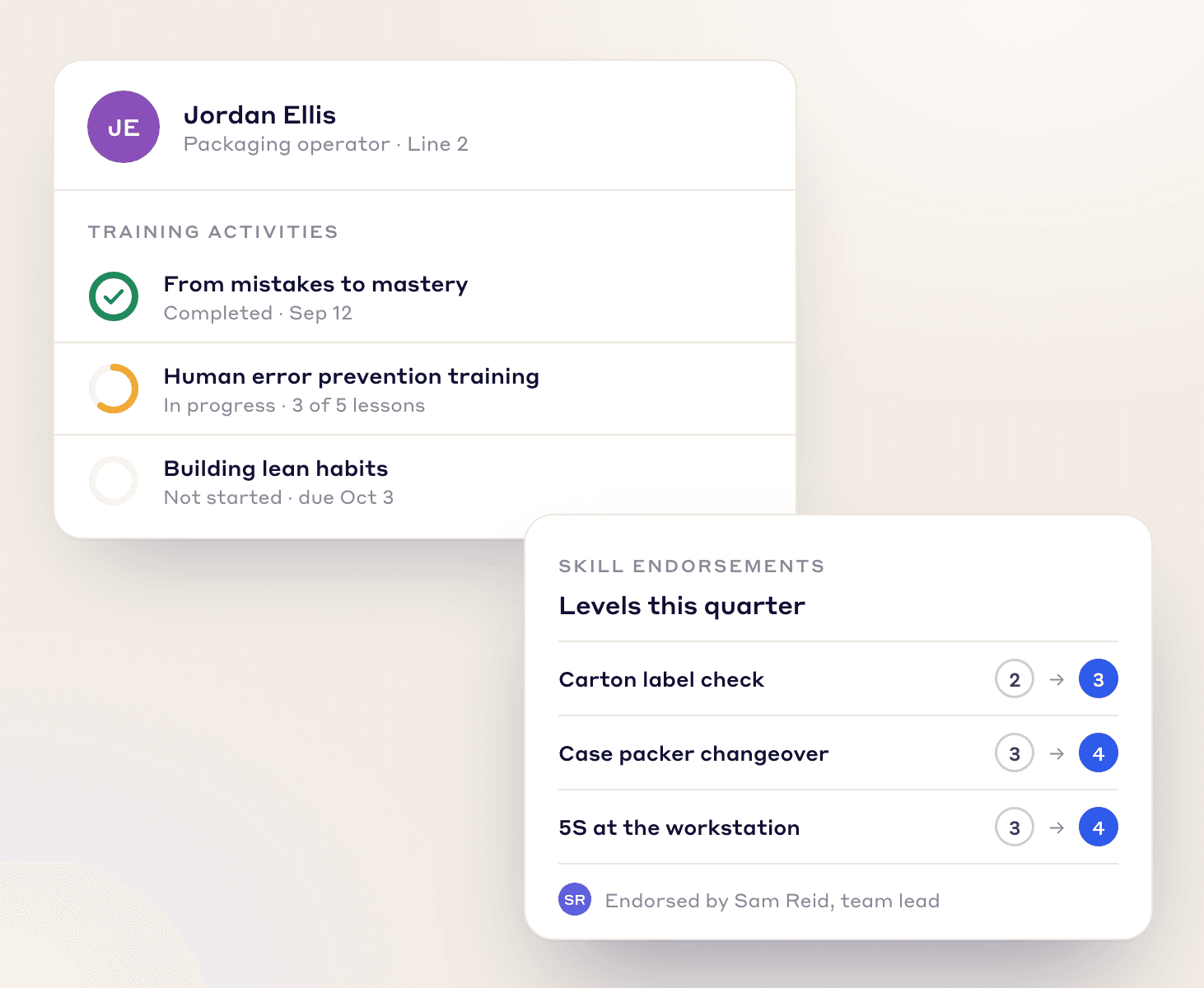
The daily routines of a plant in one place: problems raised and escalated during the shift, standard work and audits, improvement projects with measured savings, skills and training, and KPIs every tier can see. LeanSuite covers all of these in one platform, priced per facility with unlimited users.
See how LeanSuite brings process optimization, continuous improvement and employee engagement together to deliver more value to your customers.