Skip to content

Cost Reduction: Manage manufacturing costs and improve profitability

Manufacturing cost reduction in LeanSuite starts with a cost on every loss: loss trees show where your plant loses money, standard work removes waste, and KPI dashboards track the savings.

By clicking "Schedule Demo," you agree to the use of your data in accordance with LeanSuite's Privacy Notice, including for marketing purposes.

Watch

Two short stories from the plant floor

· 5:42

Savings Targets: How to Prove Real ROI in Your Plant

Corporate often holds back ten percent of the plant budget as a savings target. Most plants respond by splitting a number across the lines and hoping. This episode follows one plant manager who tries that, gets stopped, and builds the target from the floor up instead. Along the way the crew sorts hard savings, soft savings, virtual savings and cost…

Press play to load the player from YouTube.
· 4:52

How plants really set and defend savings targets

Corporate often holds back ten percent of the plant budget. That becomes the savings target, and somebody has to find it. In this episode the crew chases that number around the plant, from a top down guess to a bottom up list. Along the way they sort four kinds of savings: hard, soft, virtual and cost avoidance. They learn why extra capacity you built but…

Press play to load the player from YouTube.
Why LeanSuite

Where manufacturing cost reduction comes from

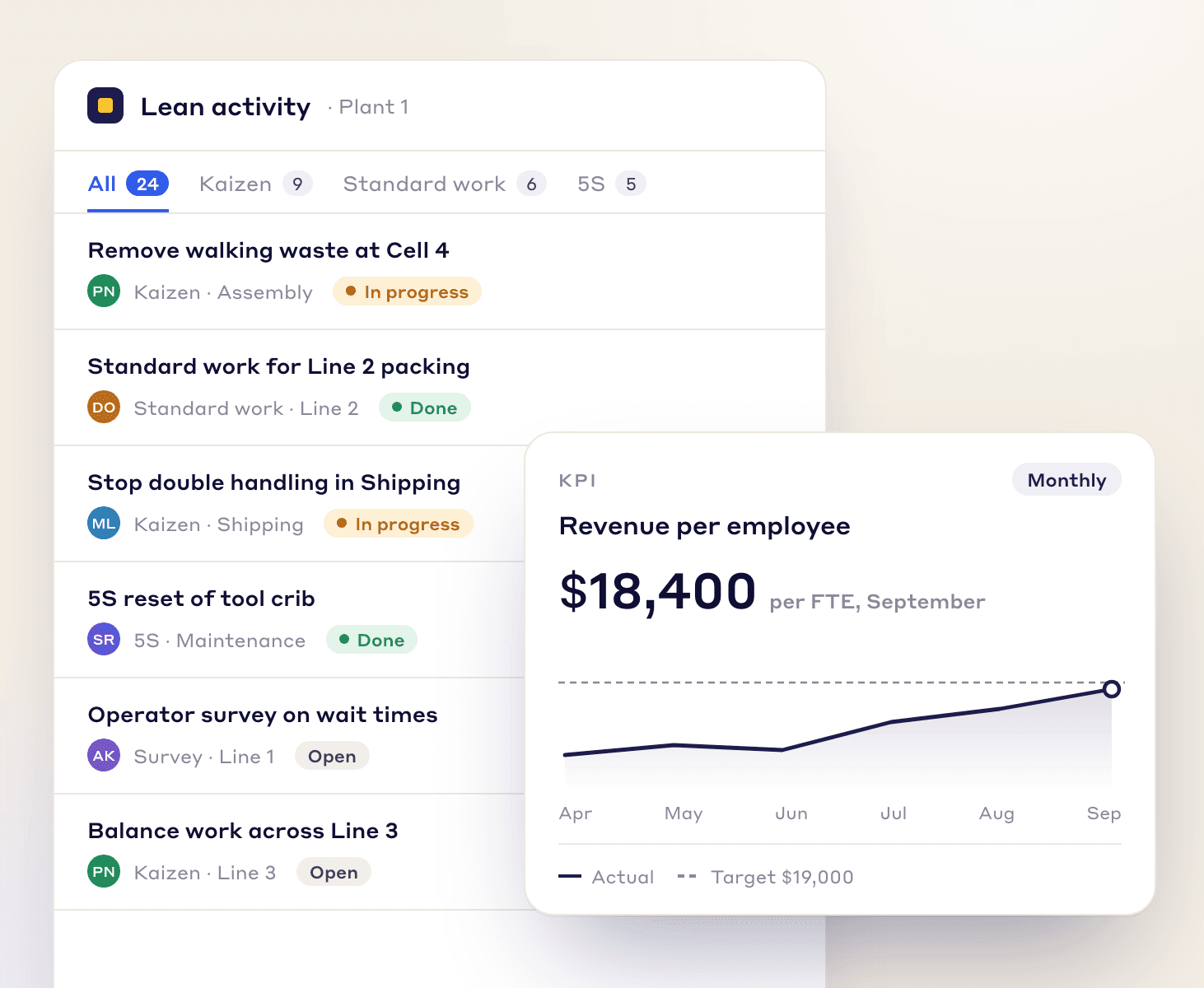
Lean activity list of kaizen, standard work, 5S and survey tasks, next to revenue per employee tracked monthly against target

Revenue per employee

Build a more productive workforce

Cut waste step by step, so your team's hours go into work that adds value and revenue per employee rises.
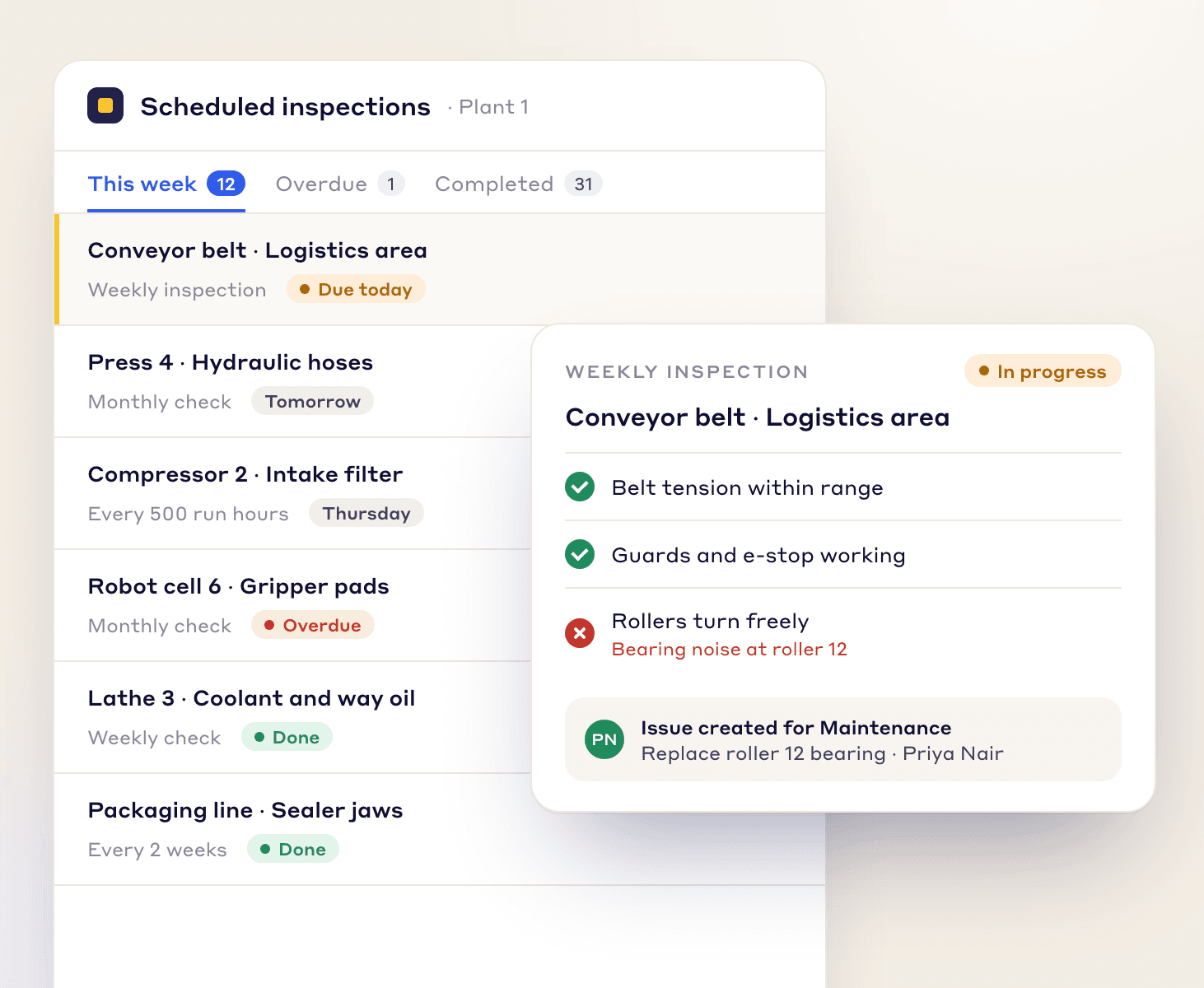
A week of equipment inspections, with a conveyor inspection flagging a noisy roller bearing and raising a maintenance issue

Reduce maintenance costs

Plan maintenance before machines break

Move from emergency repairs to scheduled inspections, so equipment stays reliable and maintenance costs come down.
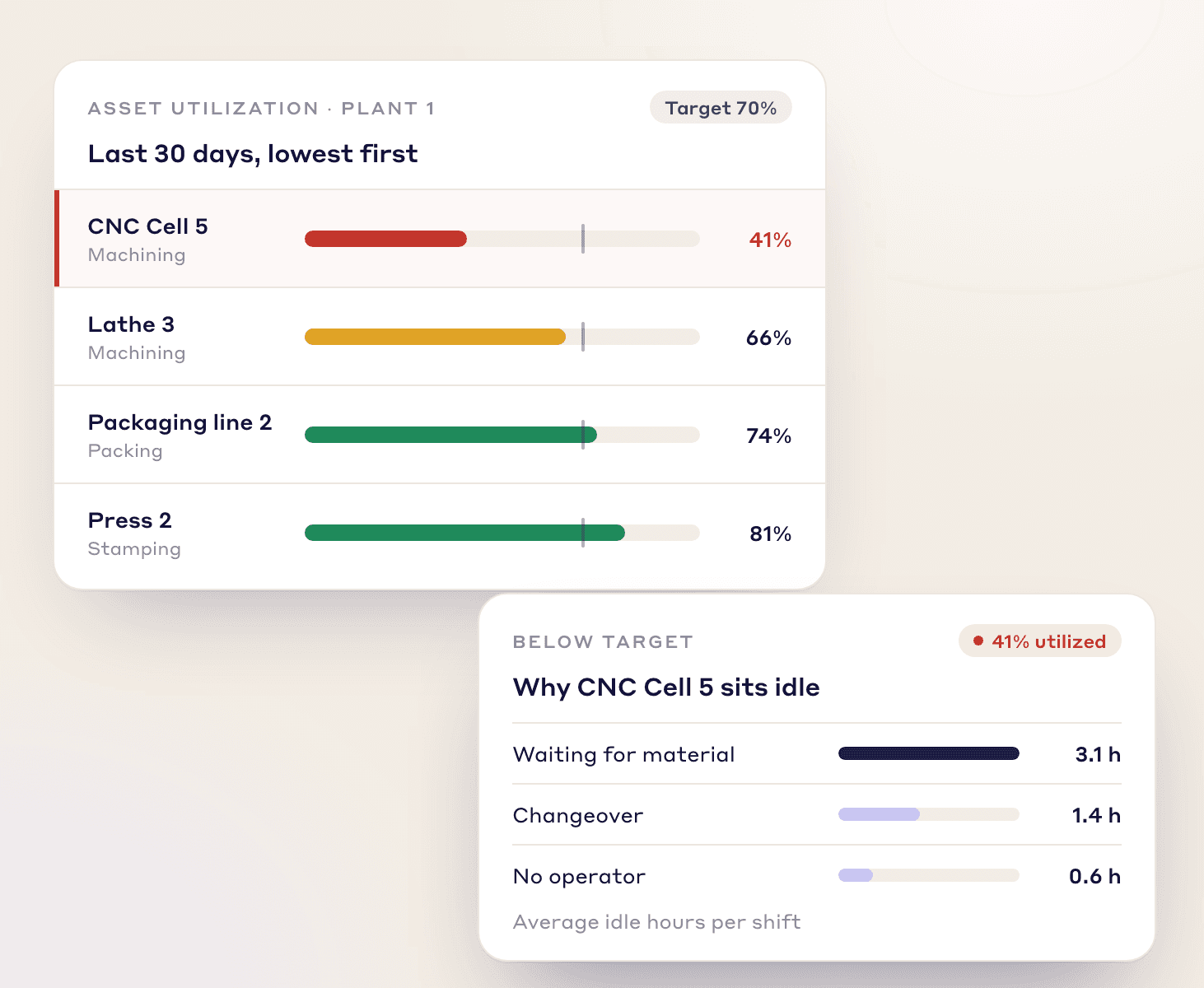
Asset utilization list sorted lowest first against a 70% target, with a breakdown of why the least used machine sits idle

Return on assets

Put every asset to profitable use

See how each asset is being used, find where it is underused, and correct it so your equipment keeps earning its keep.
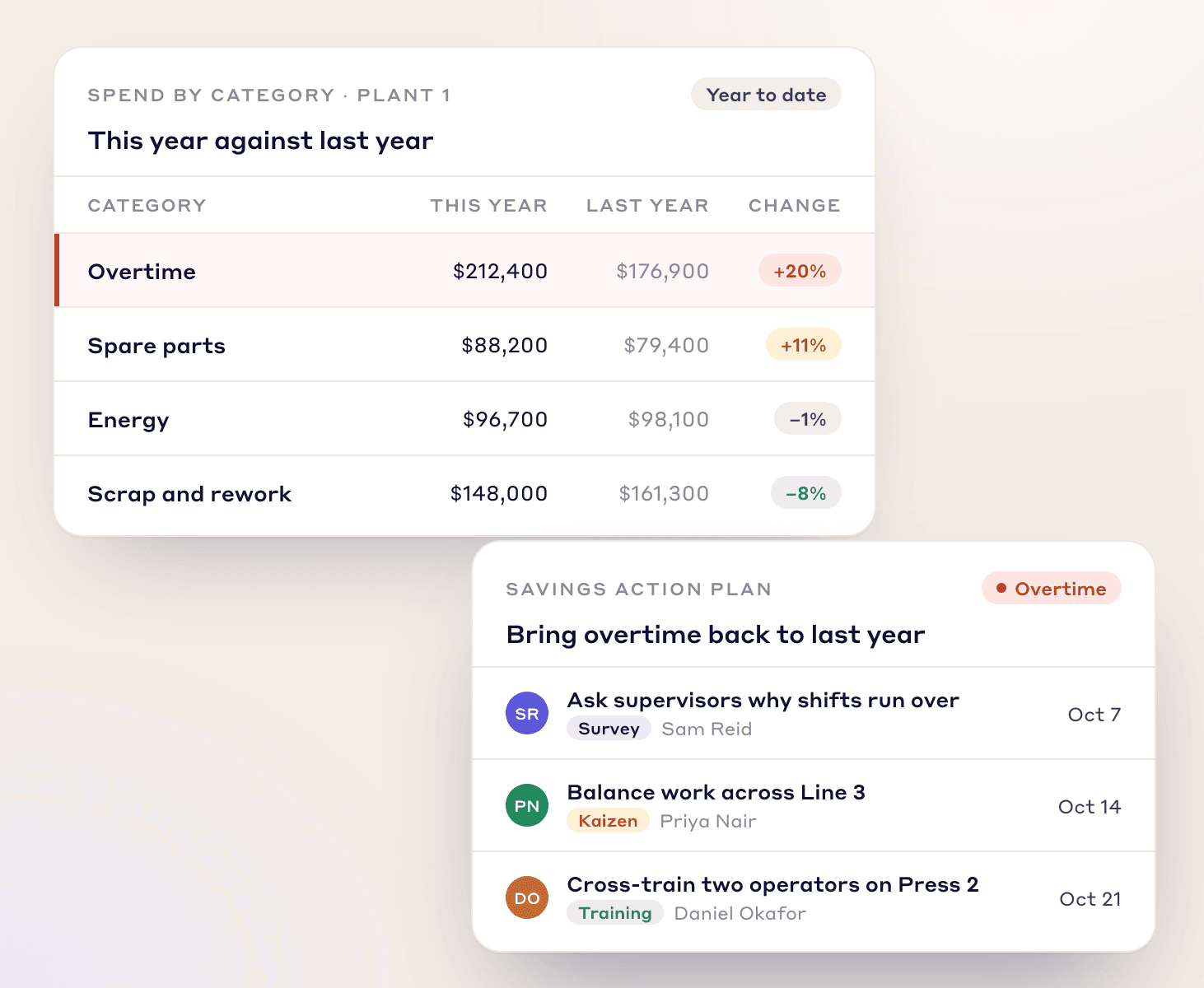
Spend by category against last year with overtime flagged, and a savings plan of a survey, a kaizen and cross-training

Year-over-year savings

Find new savings every year

See where you overspend or where a process can be simpler, act on it, and keep cutting costs.

Our solutions

The tools behind your cost reduction program

Find your biggest losses, define the most cost-effective way to do each job, and track your cost KPIs in one place.

  • Loss and Cost Management System

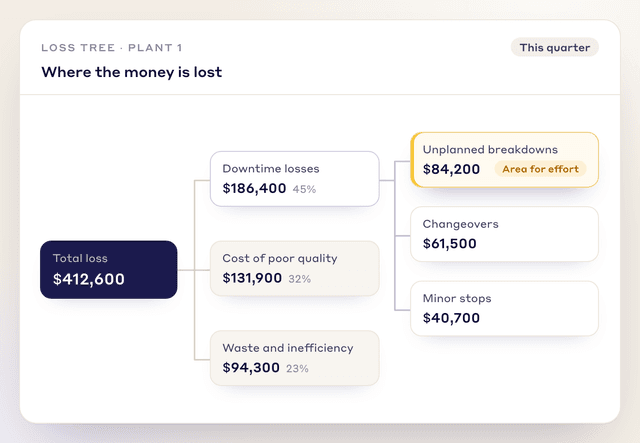
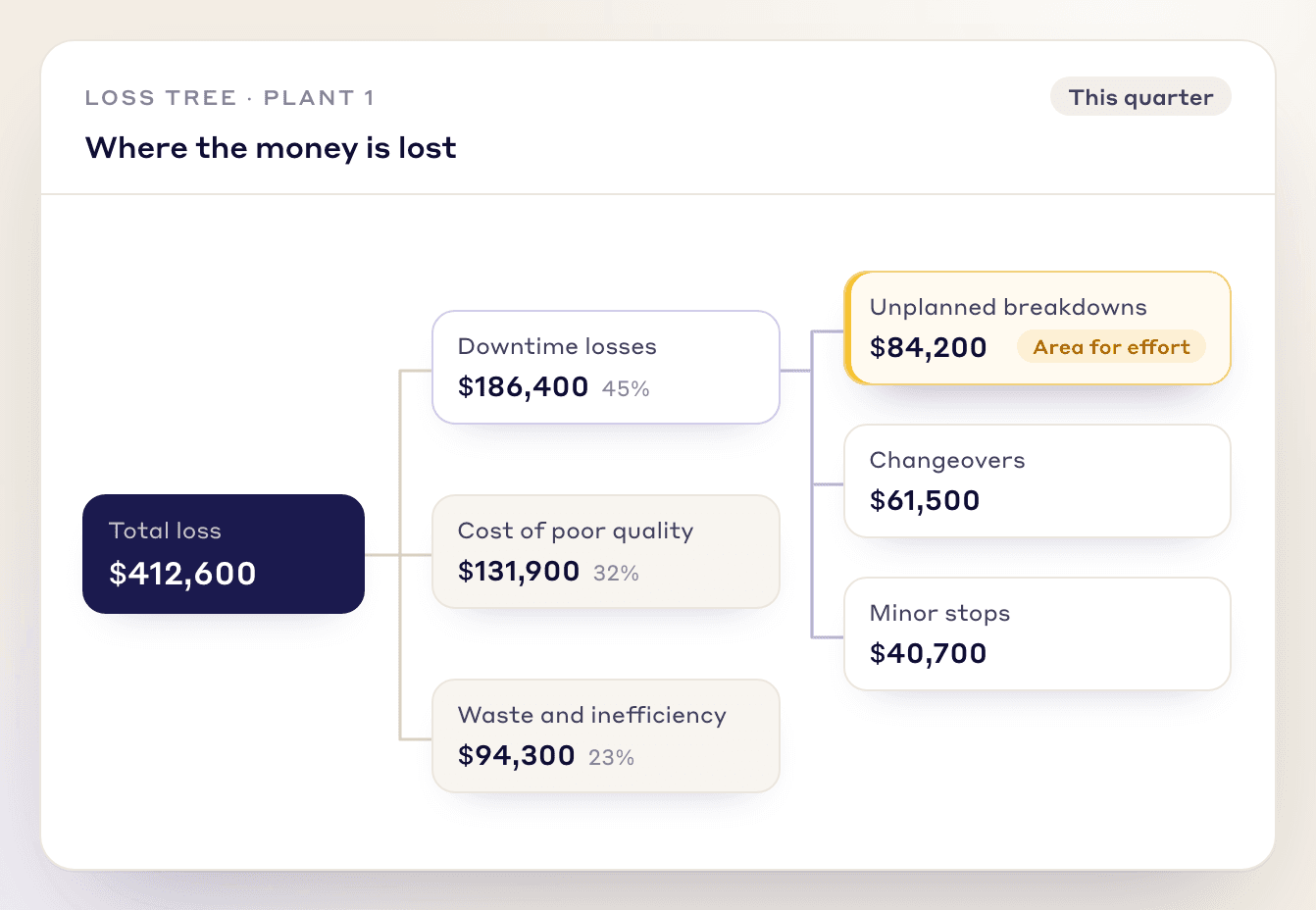
    See losses and costs in real time with automated loss trees

    Identify, log and resolve operational losses in one place, helping your teams respond faster across your manufacturing operations.

    Loss tree splitting a $412,600 quarterly loss into downtime, poor quality and waste, with breakdowns as the area for effort
  • Manufacturing Document Builder

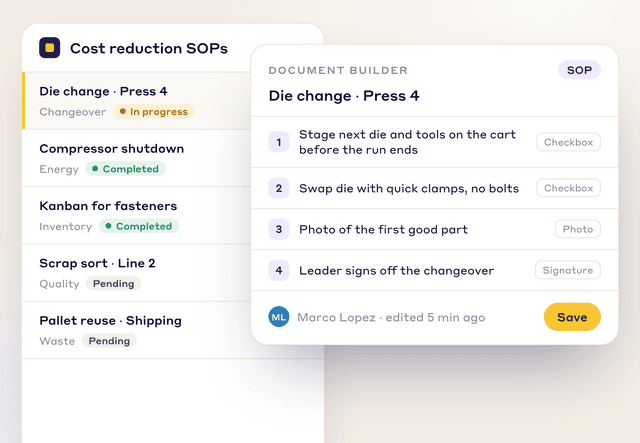
    Standardize your processes to reduce operational costs

    Define the most cost-effective way to do each task, so teams use resources wisely and stop paying for avoidable waste.

    Cost reduction SOPs and a four-step Press 4 die change SOP in the document builder, with checkbox, photo and signature steps
  • KPI Builder & Dashboards

    Put every cost KPI on one screen

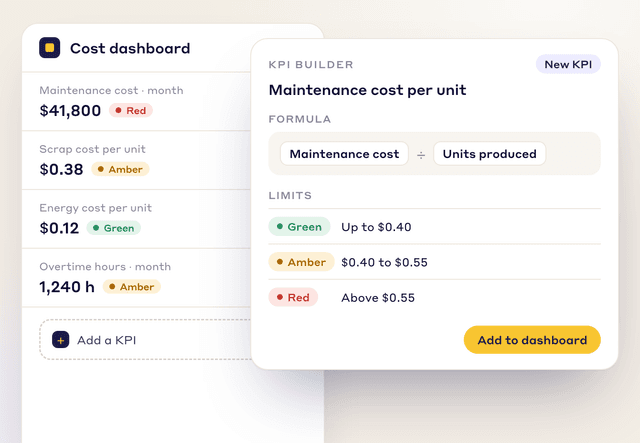
    Build custom dashboards for your factory expenses, so you can spot cost-saving opportunities and act on them quickly.

    Cost dashboard and a new KPI, maintenance cost per unit, built as maintenance cost divided by units produced, with limits

FAQs

Frequently Asked Questions

  1. Manufacturing cost reduction is the ongoing work of lowering what it costs to run a plant by cutting waste, downtime and underused assets. LeanSuite supports it with three tools: Loss and Cost Management to find your biggest losses, the Manufacturing Document Builder to standardize each job, and KPI Builder to track your cost KPIs.

  2. The biggest savings usually come from losses the plant already pays for: unplanned downtime, scrap and rework, long changeovers, excess inventory and labor spent on work that adds no value. Plan maintenance instead of waiting for breakdowns, standardize the best way to do each job, and fix the causes of recurring losses rather than their symptoms. Rank losses by cost first, so effort goes where the money is.

  3. With a cost on every loss. Once losses are measured and ranked by what they cost, the first projects are clear and savings can be tracked against a target. LeanSuite's Loss and Cost Management System builds this ranked view from your data with automated loss trees, and KPI Builder tracks your cost KPIs as projects deliver.

  4. Record each project's savings as hard or soft, with its costs next to the benefits, and have finance check them before the project closes. In LeanSuite a workflow step can require hard savings before a project reaches finance, and the glide path shows closed savings against projected ones.

  5. You upload loss data and map its columns once, and the Loss and Cost Management System builds a loss tree that ranks each loss by what it costs.

  6. COPQ is what it costs when work isn't right the first time: internal failures such as scrap and rework, and external failures such as returns and warranty claims. Add prevention and appraisal costs and you get the total cost of quality. The free calculator at theleansuite.com/tools/copq-calculator works out both.

  7. Yes. KPI Builder & Dashboards put every cost KPI on one screen, with targets, RAG ranges and KPI trees that roll department costs up to the plant.

  8. Set yearly savings targets for each department. The Glidepath report shows closed, projected and carried-over savings against target month by month.

Lower your manufacturing costs

Keep evaluating your operations, find ways to reduce operating costs, and improve your bottom line.