
Counting heads
Every slot on the roster reads filled, so the shift looks covered and the training goes wherever there is room in the plan. The line you were about to leave alone is the one running on a single signed-off operator.
Coverage by memory
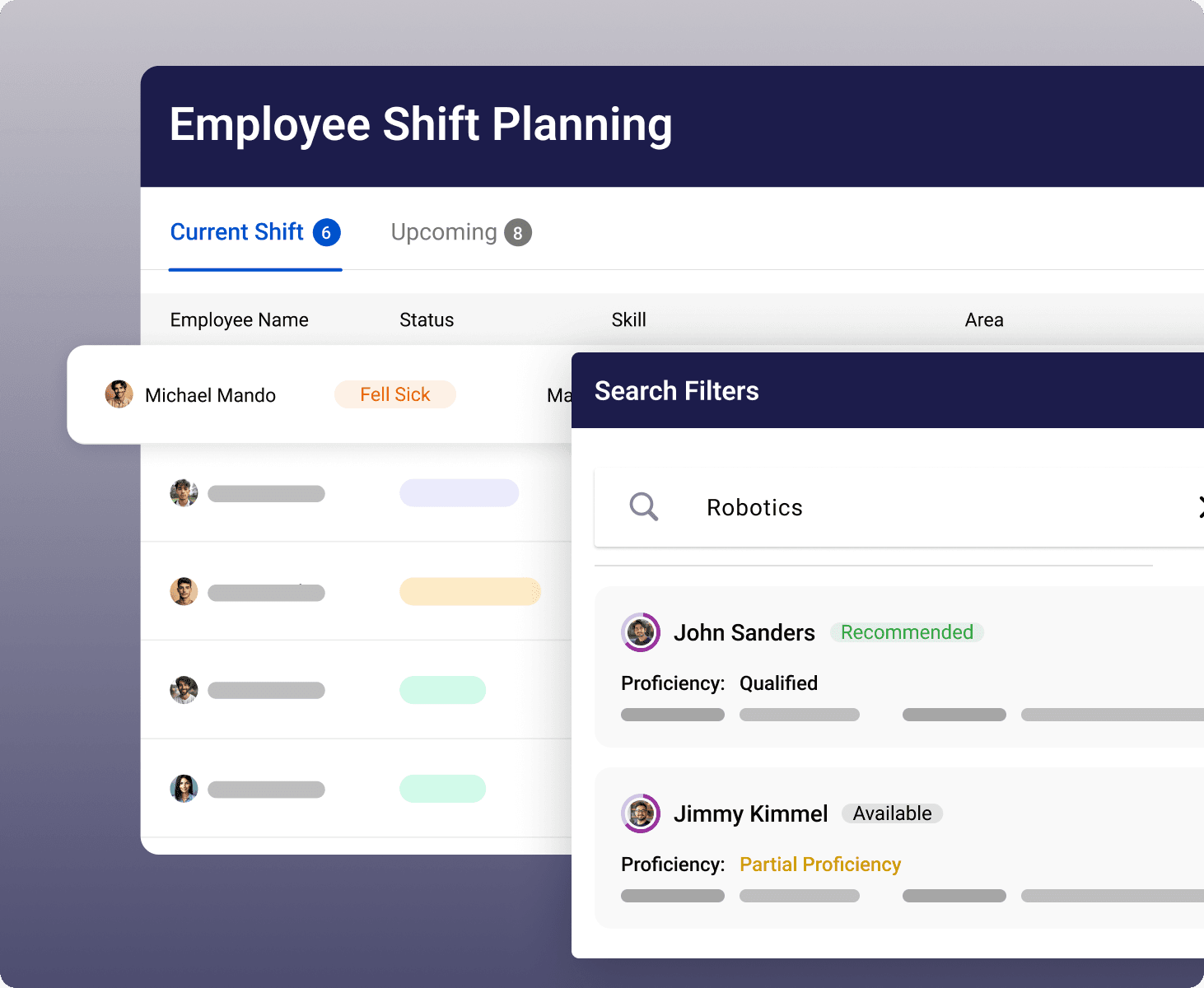
One absence and you are calling around, moving people onto stations they were never signed off on, and hoping the line holds. LeanSuite keeps who can run what, and who is free, in one place everyone can see.
By clicking "Schedule Demo," you agree to the use of your data in accordance with LeanSuite's Privacy Notice, including for marketing purposes.
TRUSTED BY INNOVATIVE LEADERS

















Same absence, two lines
Every slot on the roster reads filled, so the shift looks covered and the training goes wherever there is room in the plan. The line you were about to leave alone is the one running on a single signed-off operator.
Read the same lines by how many people are signed off on each station and the thin one jumps to the top. You train a backup there instead of on the station that already has three.
Sound familiar?
The phone goes before first shift and someone is out. Your supervisor starts working the phone from memory, because the coverage plan lives in his head and in a spreadsheet nobody trusts. The slot gets filled by whoever picks up, and the station runs with a person who was signed off on it a long time ago. When that supervisor takes a week off, the plan goes with him. A cross training matrix that lives in one person's head is a single point of failure, and you pay for it in overtime, scrap and a line running slow.
The morning call-around
Every absence starts with a supervisor working the phone from recall.
Stations run under-qualified
The slot goes to whoever answers, not to who is actually signed off on that job.
The same few carry it
Generally what happens is people just think of two or three different names that come to their mind all the time, and because they're picking up the same people, they don't necessarily have the time.
One matrix, everyone in it
The Job Cover Matrix holds who is qualified on each station and at what level, and there is no user limit or email needed to get people in.
Shifts built from skill
It brings the workload piece into the picture and suggests who's the right team member that you should be putting on the team based on their skills and also their availability.
Gaps become training plans
If the system sees there's a gap, it suggests that you can put people on this training to cover those gaps. It gives you pretty much all the training that you've completed, and those are not tracked by one individual, but by the system.
If nothing changes
The supervisor knows everyone, picks up the phone, and the shift gets covered.
The handful of people signed off on the hard stations get called first, every time, including on their days off.
New hires learn one job because there is never a quiet shift to move them onto a second one.
Whoever stands in has no list of who is qualified on what, so the line runs with whoever is standing there.
How it works
One thing you would have to do is set up in the skills matrix the requirement for each tool, so that when you're starting to use the system, the system starts upgrading users based on the LMS, based on their activity in Kaizen and so on. After that point onwards, the system automatically updates everybody.
Step 1
You can manage all the user skills, whatever you would like to manage inside the system. It could be tools, skills, all that you just upload once. All your kaizens, all your suggestions, all your skills, whatever it might be that you're doing on a spreadsheet, we would import that into LeanSuite so that day one, you're not losing any of that historical information.
Step 2
There's a skills matrix where you can manage all the different areas, different skills, at what level each person is. You could track it by individual user and also look at it across the entire department. So you could quickly identify the gaps.
Step 3
You could quickly identify the gaps and then assign the right training for that gap. If there's any courses available to cover that gap, you can assign that course right away and put people on that training with a due date.
Step 4
You can actually specify in the system how you want people to move on different skills. You can define the criteria for each of the tools that you track: if someone were to use this tool two times on a project or a Kaizen, then move them to the next level, from two to three. The system will actually take care of that and it will upgrade them on their skills chart or radar chart.
Who feels it
You get called on your day off because you are one of the few signed off on that station.
With LeanSuiteEach individual can track their progress. They have their own user profile with their skills going up over time, and they can upgrade themselves on their radar chart.
You carry the coverage map in your head and cannot take a week off without leaving a mess behind.
With LeanSuiteYou build the shift from the matrix by skill and availability, and whoever covers for you sees exactly the same picture.
You learn coverage was thin when a line runs slow or a station is being run by someone new.
With LeanSuiteIt tells you, within your facility, where you have the maximum gaps, and you can do that at individual level, project team level, or skills matrix team level.

From our co-founder
“There's a connected skills matrix and LMS that keeps track of all the employee skills and suggests trainings that would upgrade them for the next Kaizen project or next activity.”
Where to go next
The call-in is the symptom; the plan living with one supervisor is the cause. These three pages cover filling the slot today, building more people who can take it, and keeping the skills picture current.
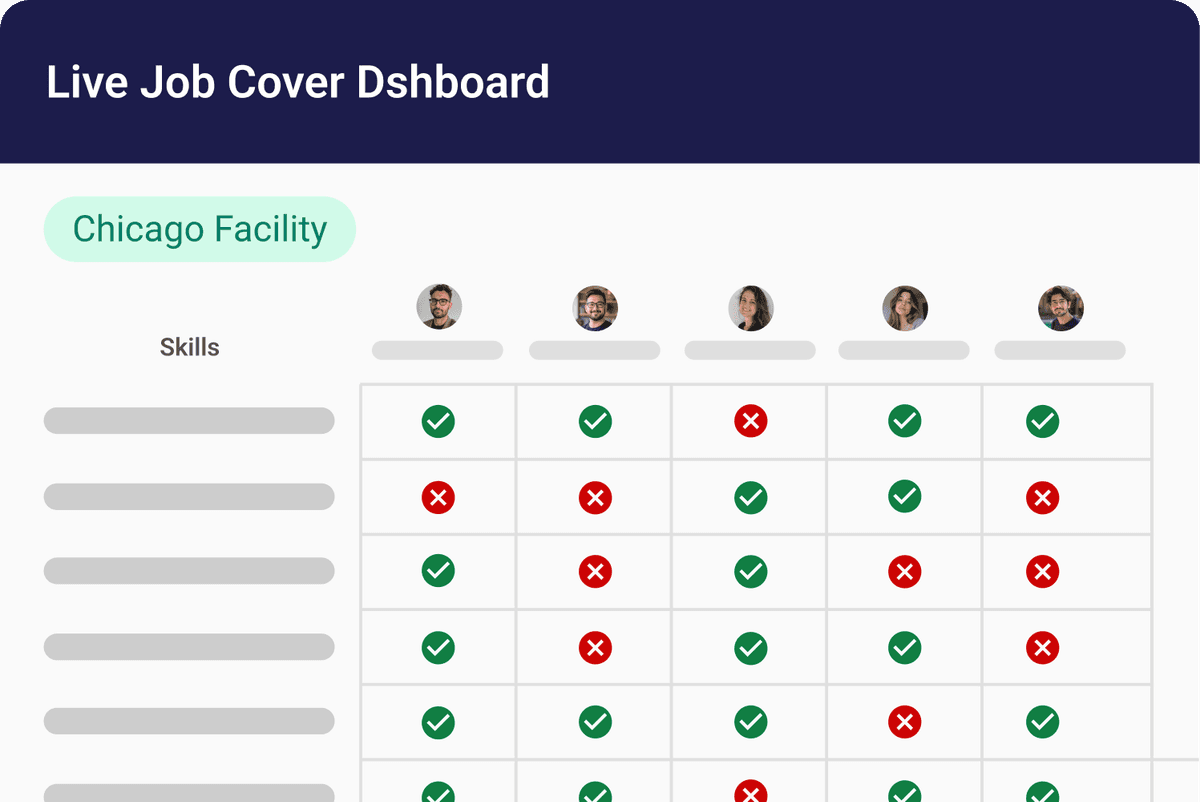
A live, visual tool for filling staffing gaps in seconds instead of working the phone from memory. Keeps production running when someone calls in.
See how it works →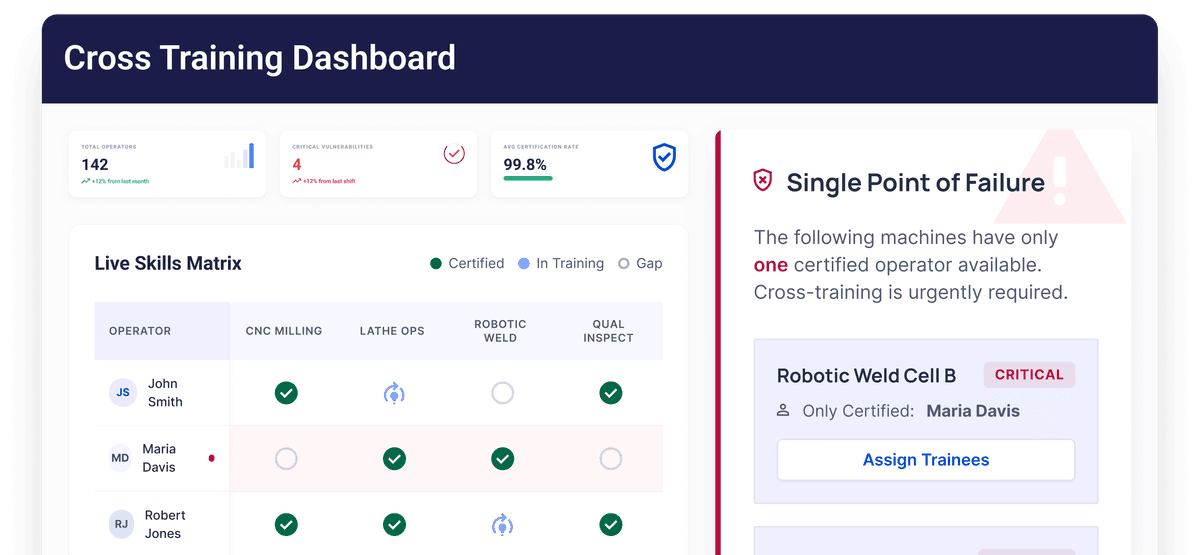
A live skills matrix shows where one absence can shut down a critical machine, and cross-training is automated from there. That is the fix for coverage that depends on one person.
See how it works →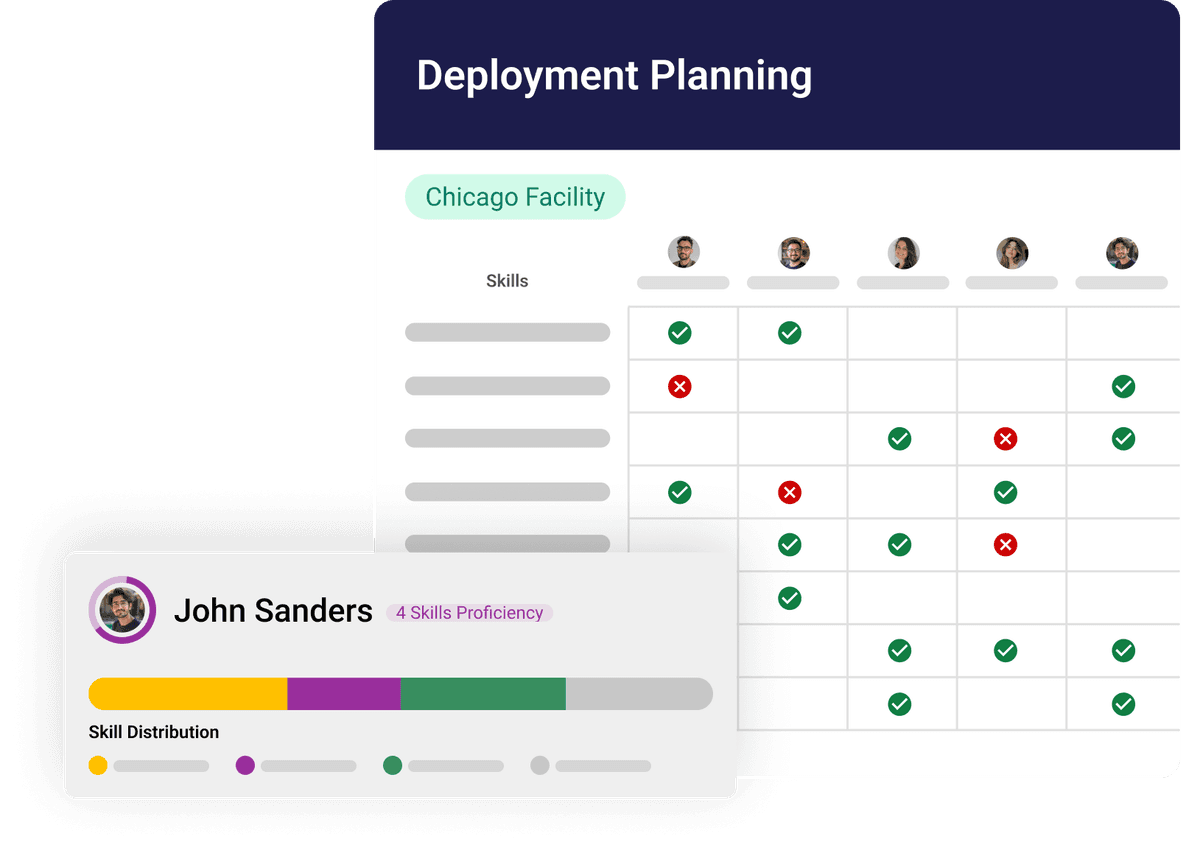
A live, visual skills matrix to close gaps and put the right person on the station. Builds a workforce flexible enough to cover shifts without guessing.
See how it works →Bring one line's stations and shifts and we will show you where you are one person deep and what training closes it.